
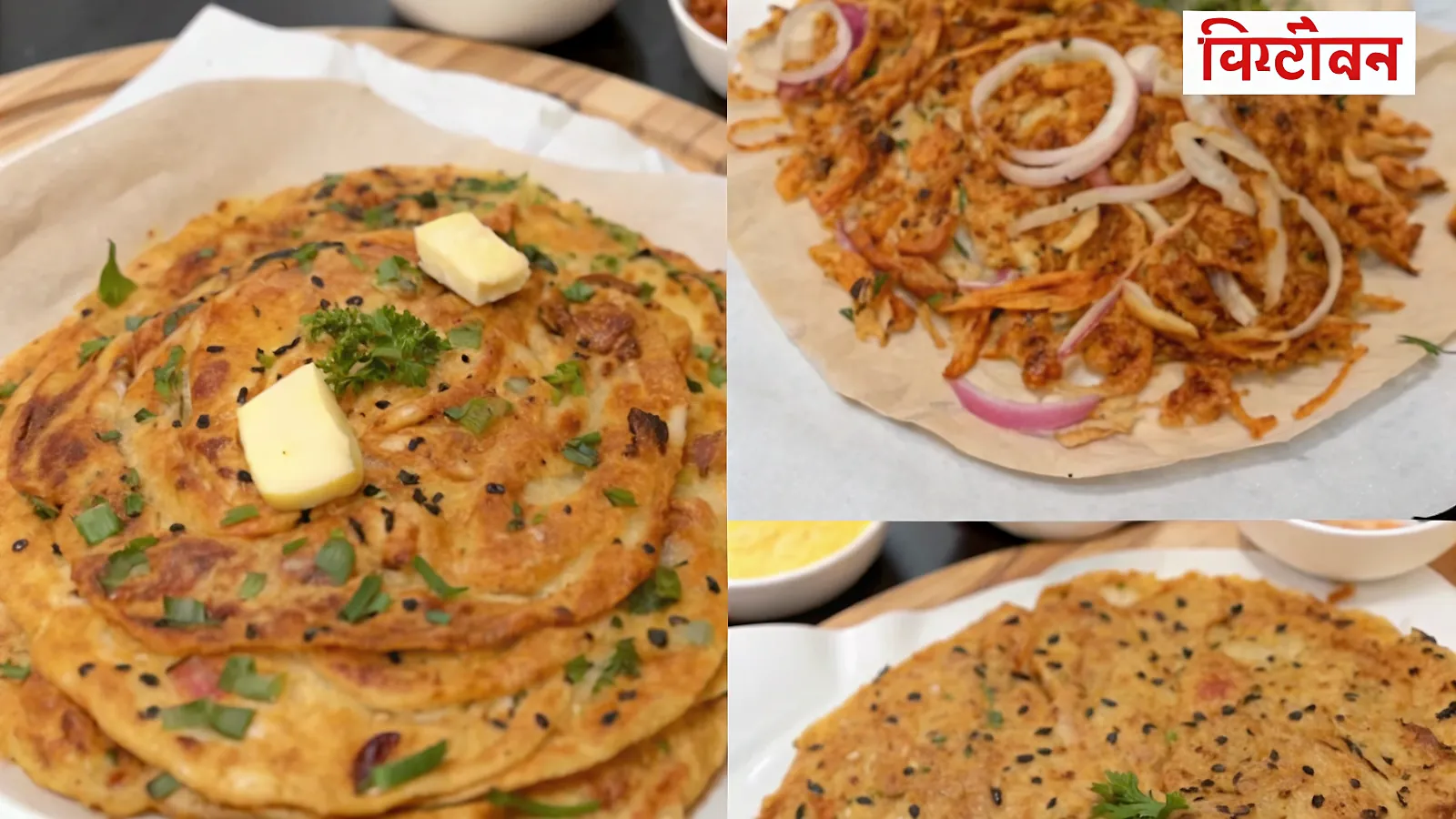
Think you can’t achieve street-food-level texture and complex spice profiles in under 30 minutes? Your home kitchen is about to be proven wrong. This isn’t just another flatbread recipe; it’s a lesson in culinary physics and efficient prep. Welcome to the Chop & Char Method, where we apply professional kitchen intensity to your weeknight dinner. Today, we’re unlocking the secrets of the legendary राजस्थानी बेसन प्याज पराठा—a dish where smoky, roasted gram flour meets the sharp sweetness of onions, all sealed within layers of blistered, golden perfection.
This recipe is a perfect example of how high-heat cooking can transform simple ingredients into a gourmet experience. If you enjoy the deep, savory flavors of our Perfect Masoor Dal – Spiced Red Lentils or the interactive fun of our Tandoori Butter Board – Perfect Party Appetizer, you’ll love the bold character of this paratha. For more on the nutritional aspects of gram flour, see this external resource on बेसन के फायदे, and for a visual guide on the layering technique, check out this tutorial on लच्छेदार लच्छा पराठा.
Why राजस्थानी बेसन प्याज पराठा is a Game-Changer for Busy Kitchens
The modern cook faces a universal dilemma: a craving for deep, artisan flavor versus the relentless tick of the clock. This is where the Chop & Char philosophy shines. The “Chop” is all about precision and speed—slicing onions into perfect julienne, mixing the spiced besan filling with military efficiency. The “Char” is where we unleash controlled fury. A screaming-hot tawa or cast-iron skillet isn’t just for cooking; it’s a flavor-forging tool. The high heat creates a crisp, blistered exterior via the Maillard reaction while locking in the aromatic steam that cooks the interior to fluffy perfection. This राजस्थानी बेसन प्याज पराठा delivers the complex, toasted notes of a dish that simmered for hours, achieved in a fraction of the time.
Expert Culinary Resources
Mastering high-heat cooking requires understanding the science behind it. The Maillard reaction—the chemical transformation that creates browned, complex flavors—thrives at temperatures above 300°F (150°C). Pair this knowledge with professional knife skills for faster, safer prep, and a commitment to sustainable ingredient sourcing to elevate your dish from good to exceptional.
Ingredients for the Ultimate राजस्थानी बेसन प्याज पराठा
राजस्थानी बेसन प्याज पराठा Ingredients
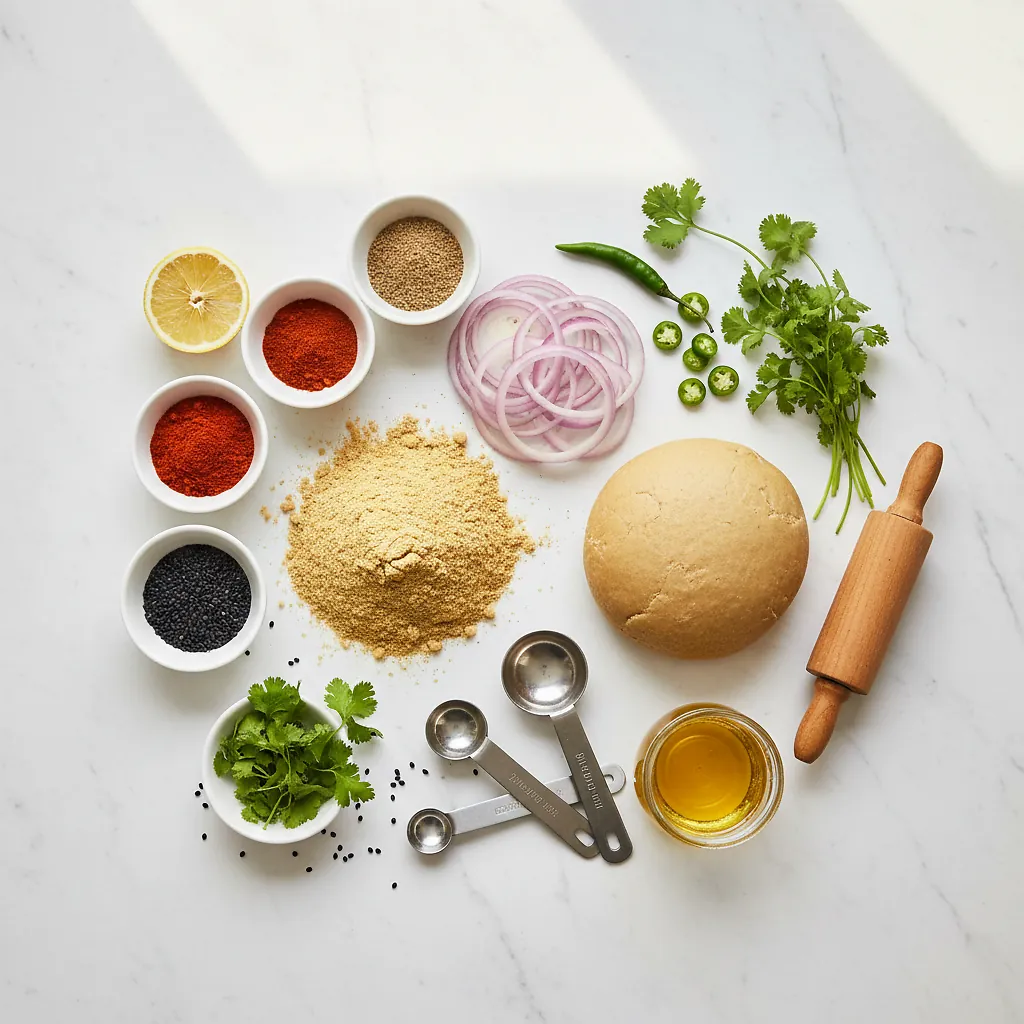
The Filling (The Flavor Bomb): 2 medium onions, julienned (long, thin slices)—this shape ensures even cooking and perfect layering. 3 cups roasted besan (gram flour)—the roasted variety is non-negotiable for its nutty depth. ½ tsp lemon juice—the acid brightens the heavy spices. ½ tsp salt. ½ tsp red chili powder. ¼ tsp cumin powder. ½ tsp coriander powder. ½ tsp chaat masala—the tangy secret weapon. 1-2 finely chopped green chilies. 2 tbsp chopped fresh coriander.
The Dough & Finish (The Vehicle for Char): Prepared whole wheat dough (keep it soft). Nigella seeds (kalonji)—for that iconic speckled flavor and crunch. Desi ghee or high-smoke-point oil—your charring agent. Pro-Tip: For the ultimate flavor, seek out artisanal, stone-ground besan. For a supermarket swap, ensure it’s labeled “roasted.” The quality of your gram flour directly impacts the final toastiness of your राजस्थानी बेसन प्याज पराठा.
The Science of the Sear: Why This Works
High heat performs magic on each component of this राजस्थानी बेसन प्याज पराठा. The besan, already toasted, undergoes a second round of Maillard browning against the hot surface, developing profoundly smoky, charred edges. The julienned onions, with their high surface area, caramelize rapidly, their sugars concentrating into pockets of sweet intensity. The layered structure of the paratha acts as an insulator; the exterior sears to a crisp shell while the steam trapped inside gently cooks the filling, melding the spices into a cohesive paste. The Chop & Char timing is critical: high-intensity heat for a short duration prevents the besan from drying out and the onions from becoming mushy. Chef Jax’s Pro Secret: A light sprinkle of water on the rolled paratha just before it hits the pan creates an instant burst of steam, helping set the layers and giving you that coveted flaky separation.
Timing Breakdown: The Chop & Char Method
Prep Time (The Chop): 20 minutes – This includes strategic slicing, mixing, and portioning. Efficiency is key. Cook Time (The Char): 15 minutes – Focused, high-heat searing per batch. Total Time: 35 minutes. Serves: 4 generous, lachha-style parathas. This is the 60-second “Flash Prep” philosophy: every action in the Chop phase has a purpose, setting the stage for the Char phase where maximum flavor is achieved in minimal contact time.
Step-by-Step Instructions
Step 1: The Chop [Precision Slicing & Mixing]
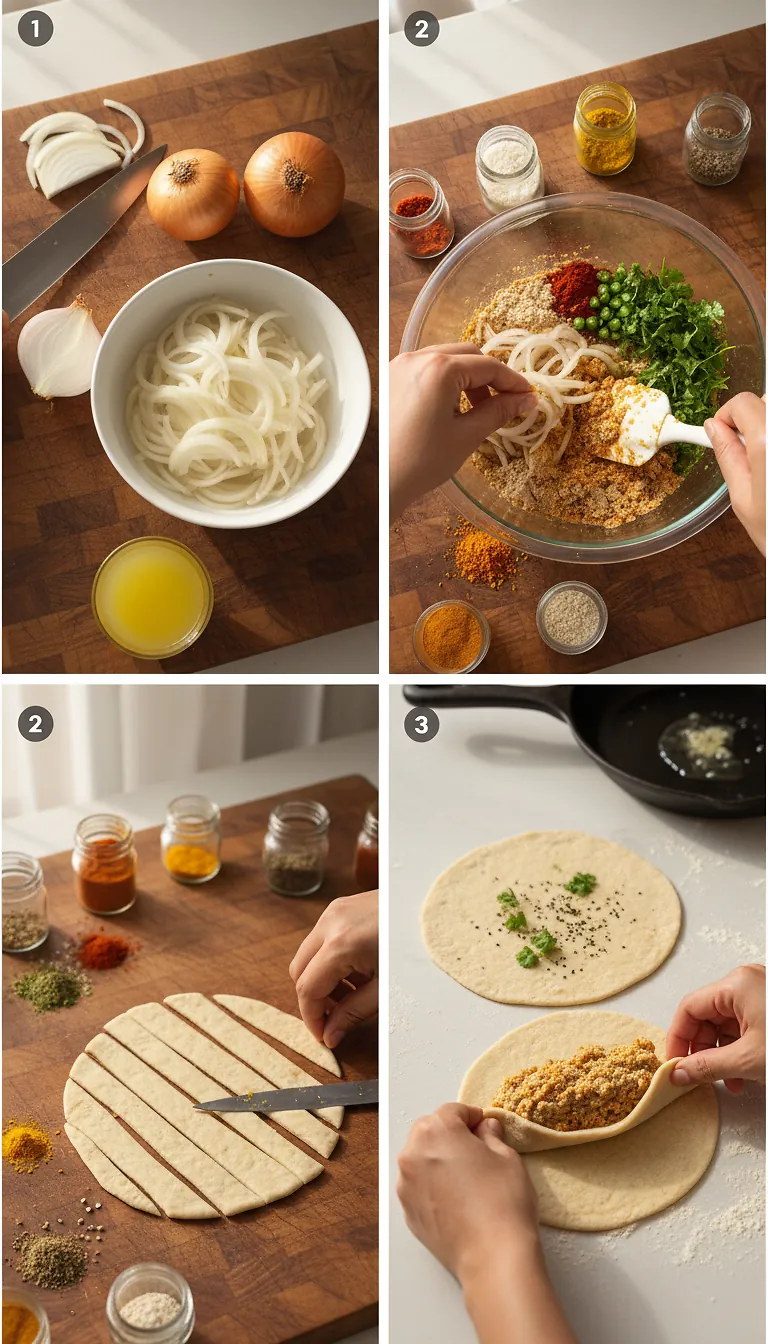
Julienne your onions into long, thin strips. Consistent size ensures even cooking. In a bowl, combine the sliced onions, roasted besan, all dry spices, green chilies, fresh coriander, and lemon juice. Mix thoroughly until the besan coats every strand of onion and the mixture holds together when pressed. Timing: 7 minutes. Common Mistake: Using raw besan will result in a raw, pasty flavor. Always use pre-roasted.
Step 2: The Chop [Dough & Assembly]
Take your pre-kneaded soft wheat dough. Divide it and roll out two thin circles of equal size. On one circle, spread the besan-onion filling evenly, leaving a small border. Place the second circle on top and seal the edges firmly to create a stuffed disc. Using a sharp knife, cut this disc into long, vertical strips. Group these strips into four equal portions. Take one portion, twist and roll it into a tight coil, tucking the end underneath. This is the secret to the lachha (layered) texture. Flatten the coil slightly, press in some fresh coriander and nigella seeds, and roll it out into a paratha of medium thickness. Timing: (Steps 2-7): 10 minutes.
Step 3: The Char [High-Heat Searing]
Place your heavy tawa or cast-iron skillet over high heat. Let it get properly hot—a drop of water should skitter and evaporate instantly. Add a teaspoon of desi ghee or oil and spread it. Gently place the rolled राजस्थानी बेसन प्याज पराठा onto the hot surface. Let it cook for 60-90 seconds until you see bubbles forming and the bottom develops golden-brown spots. Flip. Add another teaspoon of fat around the edges. Press down lightly with a spatula to ensure even contact. Cook until both sides are deeply speckled with dark golden-brown, crispy patches. Timing: 3-4 minutes per paratha. Common Mistake: Crowding the pan lowers the temperature drastically, leading to steamed, soggy parathas. Cook one at a time for the best char.
Pro Tips for Achieving the Perfect Char
Surface Moisture Control: Ensure your rolled paratha’s surface is dry before it hits the pan. Any excess moisture will steam first, delaying the crucial Maillard browning. Pan Temperature Benchmark: Your pan should be visibly hot, with a faint wisp of smoke rising. This is the “sear zone.” Knife Angle for Faster Prep: When slicing the stuffed disc into strips, use a straight, vertical down motion for clean cuts that separate layers. Carry-Over Cooking Awareness: The paratha continues to cook from residual heat after being removed from the pan. Account for this by taking it off when it’s just shy of your desired doneness. Resting Period Importance: Let the राजस्थानी बेसन प्याज पराठा rest for 60 seconds on a wire rack after cooking. This allows steam to escape, preserving the crispness you worked so hard to achieve.
Behind the Recipe: Chef Jax’s Kitchen Notes
The inspiration for this Chop & Char version came from a roadside dhaba on the outskirts of Jodhpur, watched over by a cook who moved with a rhythm that was pure efficiency. His tawa was infernally hot, his knife strokes were decisive, and the parathas that emerged were things of blistered beauty. This recipe is an ode to that efficiency. It embodies the Chop & Char lifestyle: respect for bold flavors, a reverence for the transformative power of heat, and an unwavering commitment to not wasting a single second in the pursuit of something delicious.
Perfect Pairings & Signature Dips
While this राजस्थानी बेसन प्याज पराठा stands powerfully on its own, it welcomes bold companions. A cool, creamy raita provides a tangy contrast to the char. For a more decadent experience, pair it with a robust dal makhani. Staying true to our non-alcoholic focus, serve it with a complex cumin-black salt tonic or a tall glass of grilled pineapple water with a hint of mint to cut through the richness.
Frequently Asked Questions
Q: What’s the best way to store leftover राजस्थानी बेसन प्याज पराठा?
A: Let them cool completely, then store in an airtight container. Reheat on a dry, hot tawa or skillet to restore crispiness—avoid the microwave.
Q: Can I make the filling for the राजस्थानी बेसन प्याज पराठा ahead of time?
A: It’s not recommended, as the salt will draw moisture from the onions, making the filling watery and difficult to seal within the dough. Prep is best done just before assembly.
Q: My besan filling tastes raw even after cooking. What went wrong?
A: This is almost always due to using unroasted gram flour. Always source besan labeled “roasted” for this recipe.
Q: How high should the heat be for the perfect char on my राजस्थानी बेसन प्याज पराठा?
A: Use the highest heat your stovetop and pan can sustain. A cast iron or carbon steel tawa is ideal for retaining and evenly distributing this intense heat.
Conclusion
Restaurant-quality texture and deep, layered flavor don’t require hours of prep or specialized equipment. They require a plan, precision in the Chop, and courage in the Char. This राजस्थानी बेसन प्याज पराठा is your proof. Heat is your friend—don’t fear the flame; command it.
राजस्थानी बेसन प्याज पराठा Final Result
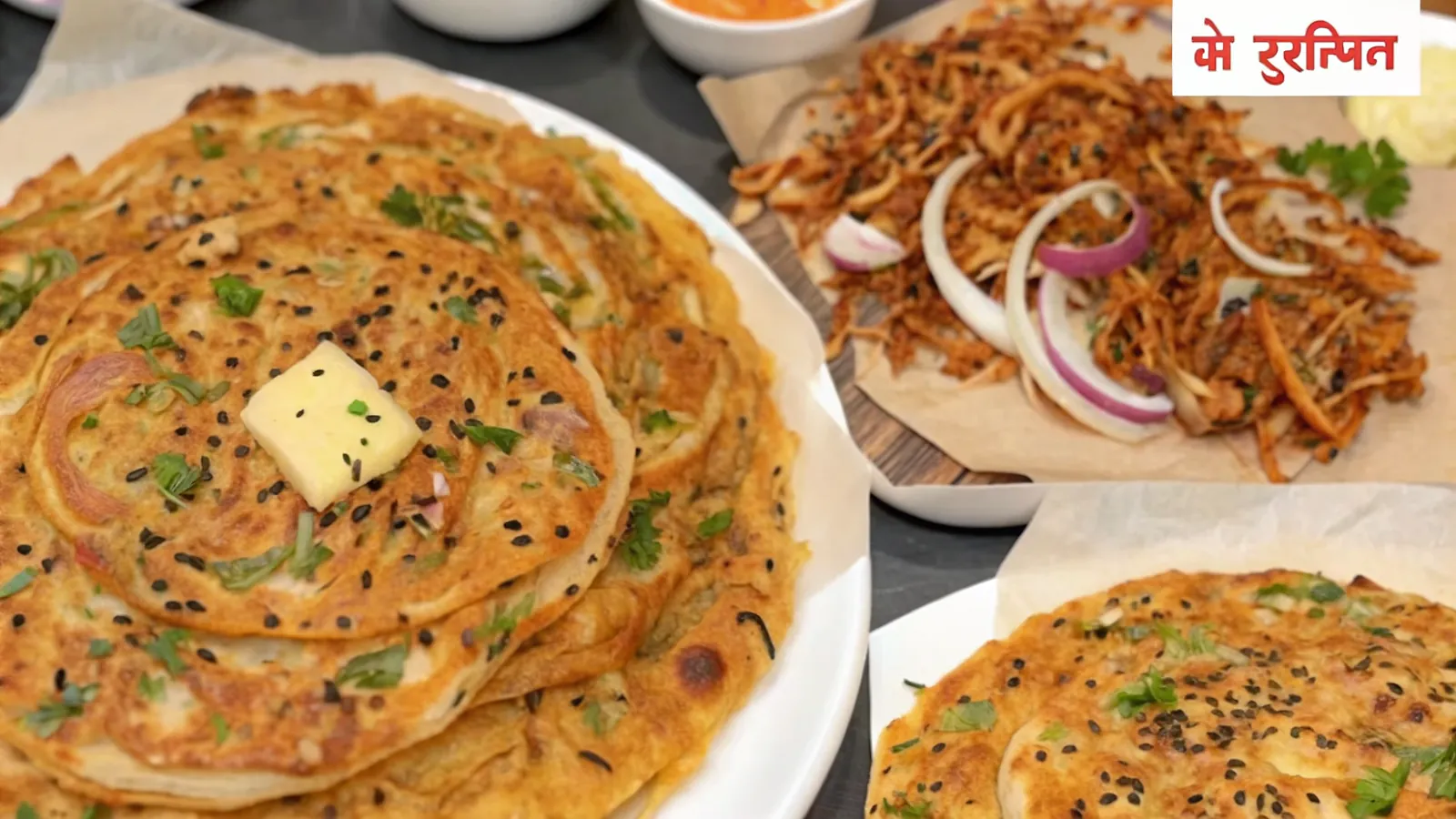
Mastered the Char? Share your kitchen success story in the comments, rate the recipe, and tag us on Instagram and TikTok with #ChopAndChar — Chef Jax might feature your masterpiece in our community spotlight!
#ChopAndChar #TheChar #TheChop #ChefJax #HighHeatCooking #15MinuteMeals #GrillMaster #RajasthaniBesanPyazParatha
राजस्थानी बेसन प्याज पराठा: Perfect Crispy 30-Minute Recipe
Ingredients
Instructions
Nutrition Facts
Nutrition data is currently unavailable for this recipe.