
You’ve tasted the glossy, jewel-like perfection of a professional Tanghulu Recipe at a street market. The crack of the hard candy shell, the burst of ripe fruit beneath—it’s an experience. But what if I told you that achieving this level of culinary artistry hinges not on hours of work, but on mastering a single, intense burst of heat? Welcome to The Chop & Char Method: where efficiency in the prep meets intensity in the heat. This isn’t just another candied fruit recipe; it’s a lesson in high-heat thermodynamics applied to dessert.
Mastering high-heat techniques unlocks a world of flavor and texture. It’s the same principle behind our Perfect Air Fryer Chicken Thighs and the blistering sear on our Perfect Chili Garlic Crispy Tofu. For this Tanghulu Recipe, precision is non-negotiable. A reliable candy thermometer is your most crucial tool, and for deeper syrup science, the work of experts like Jeffrey Morgenthaler is invaluable.
Why This Tanghulu Recipe is a Game-Changer for Busy Kitchens
Modern life demands speed, but your palate craves the complex. This is the core tension The Chop & Char Method was born to solve. This Tanghulu Recipe (Candied Fruits) dismantles the myth that sugar work is slow, fussy, and reserved for pastry chefs. The “Chop” is your mise en place: selecting and skewering flawless fruit. The “Char” is the 300°F+ sugar volcano you’ll master in a mere 5-7 minutes. It’s about transforming simple syrup into a glass-like armor through pure thermal intensity.
Expert Culinary Resources
The foundation of high-heat cooking is the Maillard reaction and caramelization—chemical processes that build flavor and texture at speed. Mastering these requires sharp knife skills for uniform prep and sourcing the best seasonal fruit you can find. Sustainable, peak-ripeness ingredients aren’t just ethical; they’re the flavor bedrock that withstands the intense heat of the sugar sear.
Ingredients for the Ultimate Tanghulu Recipe
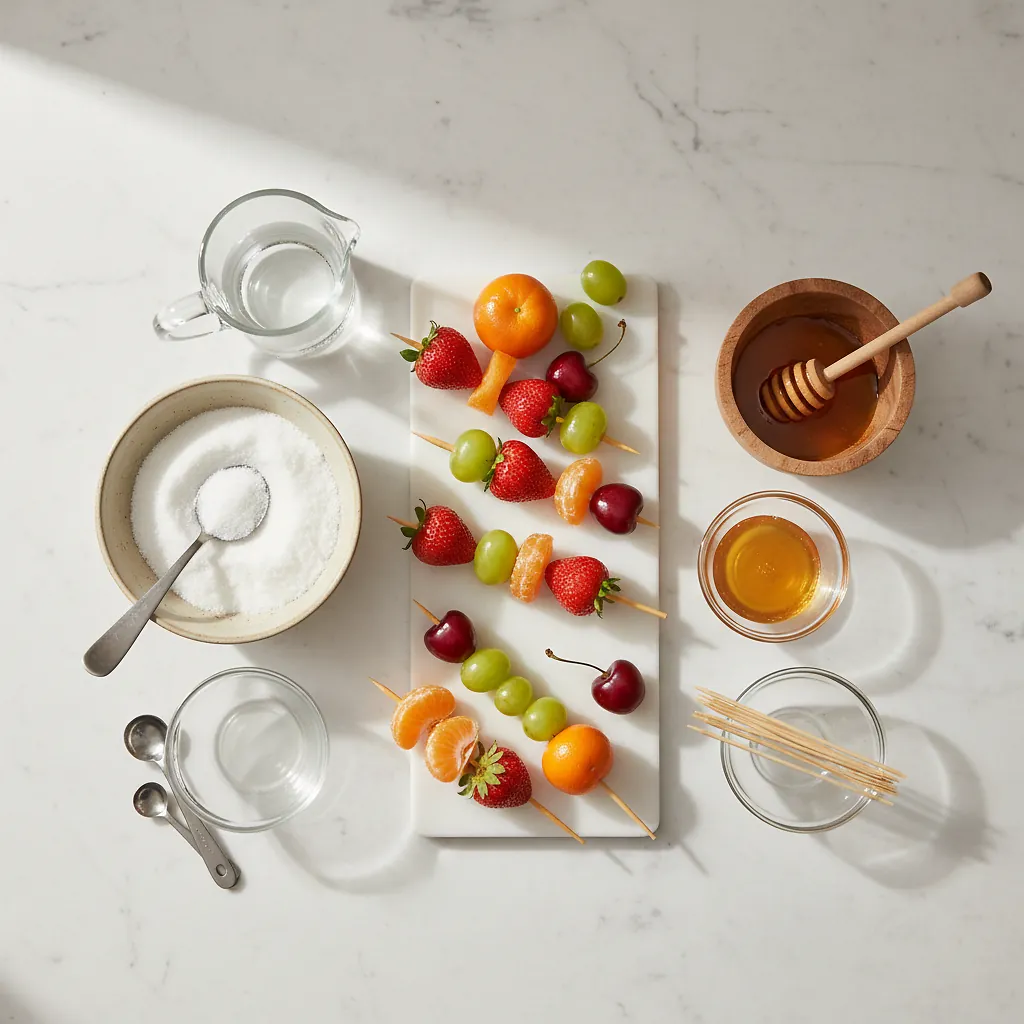
The Chop (Prep Arsenal): 1 lb small, firm strawberries (or grapes, mandarin segments, cherries). Pro-Grade vs. Supermarket: Seek out local, in-season berries for structural integrity. 1 cup granulated sugar. 1/2 cup water. Bamboo skewers, soaked in water for 30 minutes. Sensory Prep: The goal is uniform, dry, room-temperature fruit. Any surface moisture is the enemy of the perfect candy shell. Precision here dictates the final crack of your Tanghulu Recipe.
The Science of the Sear: Why This Works
This Tanghulu Recipe (Candied Fruits) is a masterclass in sugar’s physical states. You’re not just making syrup; you’re superheating it to the hard crack stage (300°F to 310°F). At this temperature, water content is minimal. When the hot syrup hits the relatively cool fruit, it undergoes a rapid thermal shock, solidifying into that signature glass-like shell. The “Char” is the high-intensity heat application; the “Chop” is the pre-skewered fruit, ready for its instant, decisive dip. Chef Jax’s Pro Secret: A drop of the syrup into ice water should form hard, brittle threads that snap. That’s your visual and tactile cue for the perfect sear. Don’t guess—use your thermometer.
Timing Breakdown: The Chop & Char Method
Prep Time (The Chop): 15 minutes – Cook Time (The Char): 10 minutes – Total Time: 25 minutes – Serves: 4-6. This is the 60-second “Flash Dip” philosophy: your fruit is prepped, your station is set, your syrup is at the perfect peak. The actual “cooking” is a swift, decisive action measured in seconds, not minutes.
Step-by-Step Instructions
Step 1: The Chop [Fruit & Skewer]
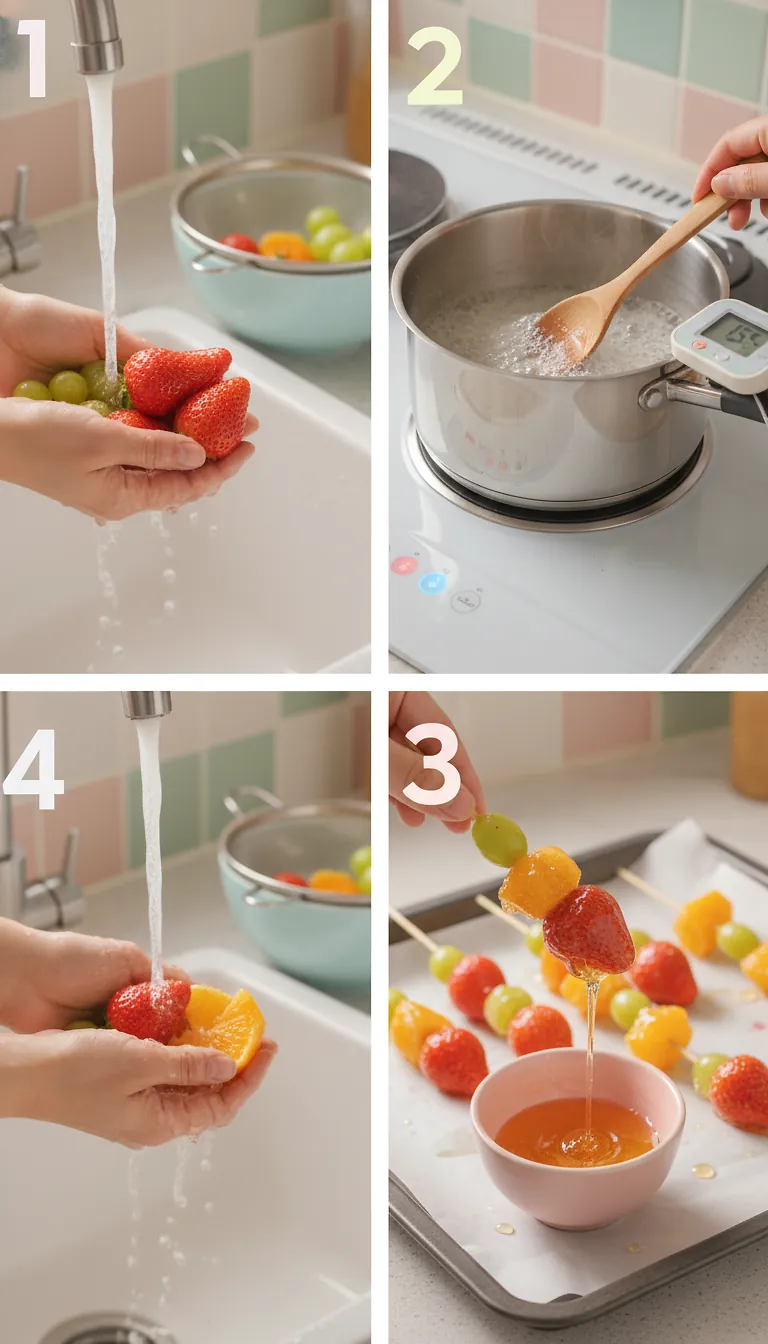
Wash and thoroughly dry all fruit. Any residual water will cause the hot sugar to seize. For strawberries, keep the stem intact for a natural handle. Pierce each piece of fruit centrally with a pre-soaked skewer—this prevents burning. Line a baking sheet with parchment paper and lightly grease it. This is your landing pad. Common Mistake: Rushing the drying process. Patience here prevents a failed, grainy shell later.
Step 2: The Char [Syrup Volcano]
In a heavy-bottomed saucepan, combine sugar and water. Heat over medium-high, swirling the pan occasionally but do not stir. Stirring introduces crystals. Insert your candy thermometer. Watch as it bubbles through the thread and soft-crack stages, climbing relentlessly to 300°F-310°F (hard crack). This is your high-heat window. The moment it hits 305°F, remove from heat. The carry-over cooking will bring it the rest of the way.
Step 3: The Flash Dip & Set
Tilt the pan to pool the syrup. Working with one skewer at a time, quickly and smoothly dip and rotate each piece of fruit to coat completely. Let excess drip for a second over the pan, then place on the prepared sheet. Heat Management: If the syrup starts to thicken, briefly return it to very low heat to re-liquify. The goal is a thin, even, glossy coat that sets within 60 seconds.
Pro Tips for Achieving the Perfect Char
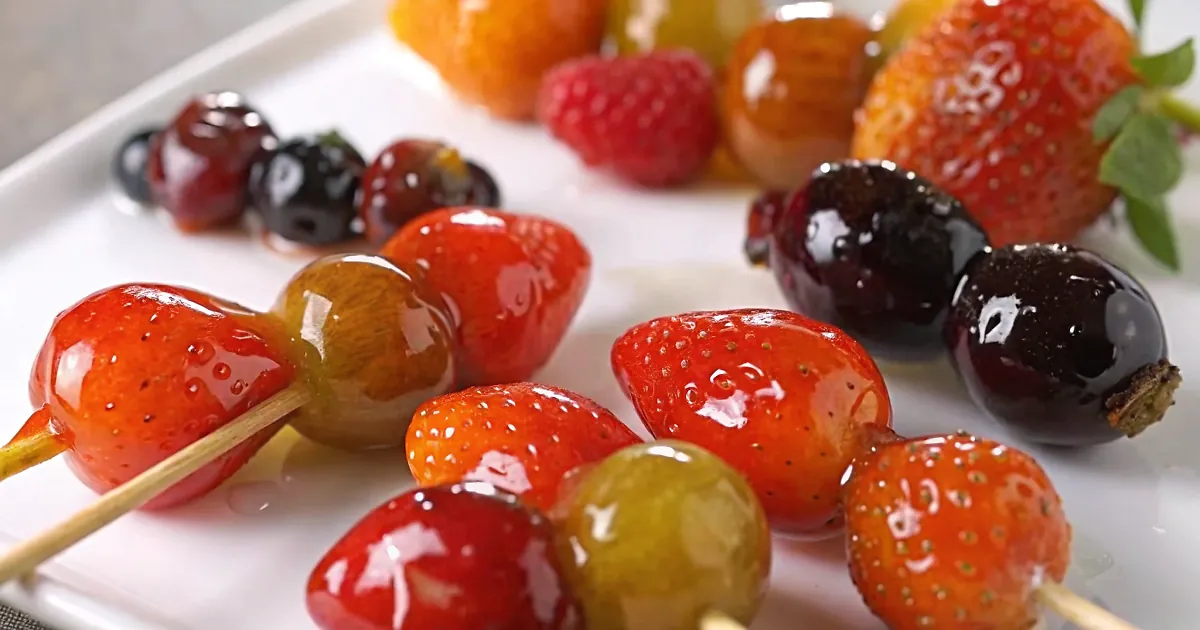
Surface Moisture Control: This is the absolute secret. Bone-dry fruit is non-negotiable. Temperature Benchmarks: A candy thermometer is your objective guide. 305°F is your target. Carry-Over Cooking: The syrup will gain 5-10 degrees after removal from heat. Factor this in. Resting Period: Allow your Tanghulu Recipe (Candied Fruits) to fully harden on the parchment for 5 minutes before serving. The shell will achieve its maximum snap.
Behind the Recipe: Chef Jax’s Kitchen Notes
This recipe was born on a freezing night watching a street vendor in a neon-lit market. His movements were pure economy: dip, twirl, set. It wasn’t pastry art; it was a high-heat operation. He understood the narrow thermal window and respected it. That’s The Chop & Char Method in its purest form: identifying the moment of maximum thermal potential and acting with decisive speed. This Tanghulu Recipe embodies that lifestyle—transforming a simple ingredient through focused, intense energy.
Perfect Pairings & Signature Dips
Balance the intense sweetness with contrasting elements. Serve alongside a tart, unsweetened whipped cream or a drizzle of aged balsamic reduction. For a non-alcoholic pairing, a sparkling yuzu soda or a chilled jasmine tea provides a clean, aromatic counterpoint that cleanses the palate between each glorious bite of your Tanghulu Recipe.
Frequently Asked Questions
Can I make a Tanghulu Recipe without a candy thermometer?
Not recommended. The hard crack stage (300-310°F) is precise. Visual cues (like the ice water test) are backups for pros. For consistent, shatter-perfect results, the thermometer is essential.
Why did my sugar shell turn out sticky or soft?
This indicates the syrup didn’t reach the full hard crack temperature, or the fruit introduced moisture. Ensure your thermometer is accurate and your fruit is completely, utterly dry before dipping.
What’s the best way to store leftover Tanghulu Recipe (Candied Fruits)?
Eat them fresh. The shell will begin to absorb moisture from the air and fruit, losing its crack within a few hours. They are a lesson in immediate, high-heat gratification.
Can I use frozen fruit for this Tanghulu Recipe?
Absolutely not. Frozen fruit retains too much internal moisture and will weep upon thawing, guaranteeing a failed, sticky shell. Always use fresh, room-temperature, dry fruit.
Conclusion
Restaurant-quality, street-market-perfect Tanghulu doesn’t require hours of slow simmering. It demands precision, respect for high heat, and the courage to act within a narrow, fiery window. This is the essence of The Chop & Char Method. Now, you hold the technique. Master the Char.
Mastered the Char? Share your kitchen success story in the comments, rate the recipe, and tag us on Instagram and TikTok with #ChopAndChar — Chef Jax might feature your masterpiece in our community spotlight!
#ChopAndChar #TheChar #TheChop #ChefJax #HighHeatCooking #15MinuteMeals #GrillMaster #TanghuluRecipe
Tanghulu Recipe (Candied Fruits) Perfect 20-Minute
Ingredients
Instructions
- Prepare the Fruits: Wash and dry the fresh fruits. Remove any stems or leaves.
- Create the Sugar Syrup: Combine the sugar and water in a saucepan. Heat the mixture over medium heat, stirring until the sugar dissolves.
- Candy the Fruits: Add the fruits to the sugar syrup and cook for 10 minutes, or until the fruits are coated with the syrup.