
Introduction
Why do so many home cooks settle for bland, time-consuming recipes when the principles of a professional kitchen—high heat and rapid prep—are easily mastered? The answer isn’t skill; it’s a flawed belief that flavor requires hours. Chef Jax dismantles that myth daily with The Chop & Char Method: Efficiency in the prep, intensity in the heat. Today, we apply this philosophy to a classic that deserves a bold, modern revival: Pickled Eggs and Sausage. This isn’t just a preservation recipe; it’s a flavor-building exercise where the initial high-heat char on the sausage sets the stage for a deeply complex, aromatic brine.
This recipe embodies the core of our site: maximum flavor with minimal time investment. If you’re new to the method, explore how we apply similar high-heat principles to proteins like our Perfect Air Fryer Chicken Thighs or Perfect Air Fryer Filet Mignon. For those interested in the broader science of preservation, Pickling – Wikipedia offers great historical context, and the community at r/Canning – Reddit is a valuable resource for safe practices.
Why Pickled Eggs and Sausage is a Game-Changer for Busy Kitchens
The modern culinary challenge is clear: a craving for gourmet, layered flavor versus a glaring lack of time. Traditional pickling can feel passive, a slow wait for taste to develop. We flip the script. By introducing a high-heat “Char” element to the sausage before it meets the brine, we inject an immediate flavor foundation—smoky, caramelized notes that the acidic bath then amplifies and balances. The “Chop” is the lightning-fast prep of onions and garlic, prepped with precision to maximize surface area for infusion. This recipe delivers a pro-grade snack, appetizer, or protein-packed addition to a board in one week of passive waiting, built on just 15 minutes of active, high-intensity kitchen work.
Expert Culinary Resources
The foundation of The Chop & Char Method rests on culinary science. The initial sear on the sausage leverages the Maillard reaction, a chemical process between amino acids and sugars that creates those complex, savory flavors and appealing brown color. Mastering this requires control of surface moisture and pan temperature. Efficient prep, or “The Chop,” is grounded in professional knife skills, ensuring safety and speed. Finally, we advocate for sustainable ingredient sourcing where possible—starting with quality components always yields a superior final product.
Ingredients for the Ultimate Pickled Eggs and Sausage
Pickled Eggs and Sausage Ingredients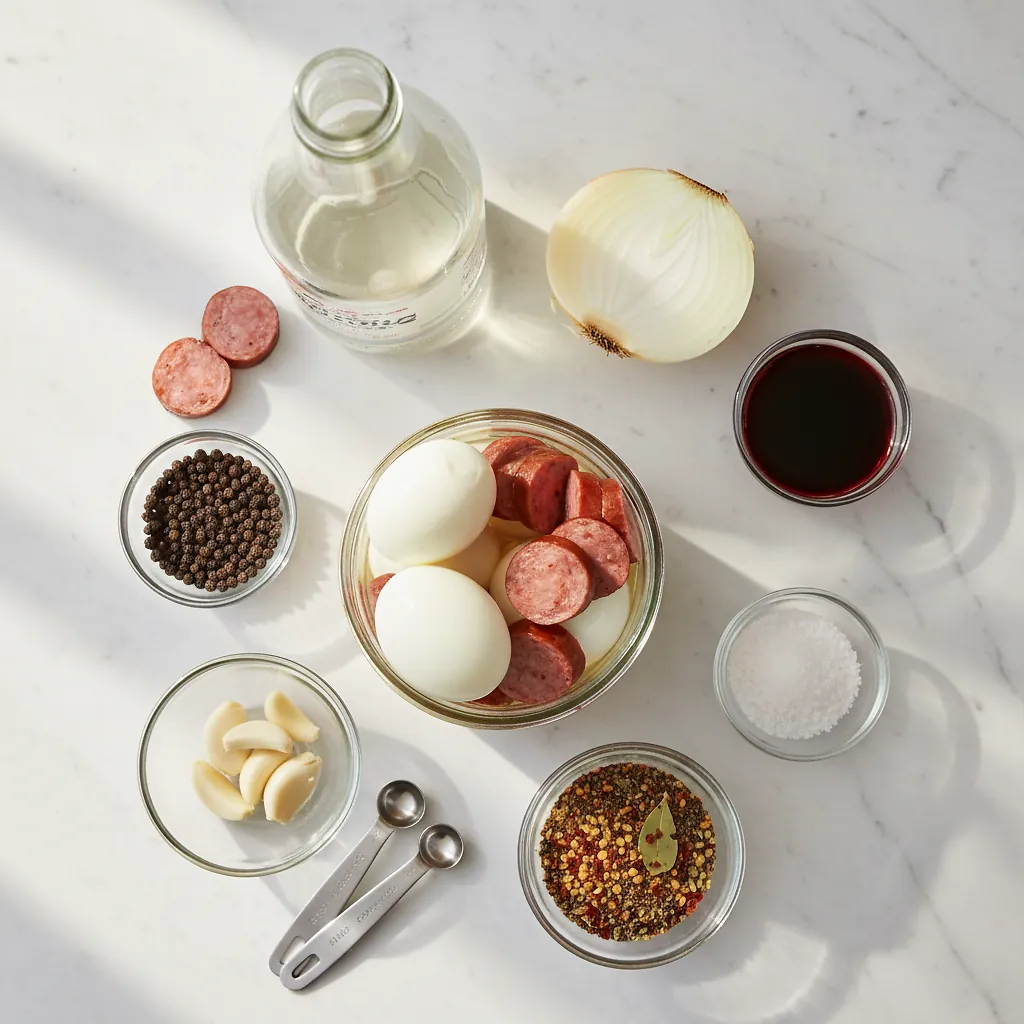
The Chop Prep Suggestions & Sensory Notes:
- 12 large hard-boiled eggs, peeled: The blank canvas. Use eggs boiled a day ahead for easier peeling.
- 1 pound smoked sausage: The Char element. Pro-grade: a coarse-ground, heavily smoked ring sausage. Supermarket alternative: a high-quality kielbasa. We will sear this to develop smoky charred edges.
- 1 yellow onion, sliced: Precision-cut aromatics. Slice into ¼-inch rings for consistent infusion.
- 2 cups white vinegar: The acidic backbone. Clear, sharp, and efficient.
- ¾ cup water: Balancer for the brine’s intensity.
- ¼ cup red wine vinegar: The flavor nuance. Adds a subtle fruity depth.
- 1 tablespoon salt: Crucial for flavor and preservation.
- 1 tablespoon pickling spice: The aromatic core. Contains mustard seed, coriander, allspice.
- 1 teaspoon black peppercorns: For earthy, pungent notes.
- 1 teaspoon crushed red pepper flakes: The controlled heat element.
- 2 cloves garlic, lightly crushed: Releases allium essence efficiently. Smash with the side of your knife.
The Science of the Sear: Why This Works
High heat isn’t just for steaks. Applying it to the smoked sausage before pickling is a transformative step. The Maillard reaction on the sausage’s surface creates new flavor compounds—roasty, nutty, complex—that are more robust and soluble in the acidic brine. This means the pickling process doesn’t just permeate the sausage; it interacts with a deeper, pre-built flavor profile. The Chop & Char timing is key here: a short, high-intensity sear (The Char) followed by the rapid assembly (The Chop) of the other components. The boiling of the brine itself is another high-heat event that extracts maximum flavor from the spices and garlic in minutes, not hours.
Chef Jax’s Pro Secret for Pickled Eggs and Sausage: Do not slice the sausage before searing. Sear the whole ring in a scorching pan to create a uniform flavor crust without losing interior moisture. Slice it after searing for layering in the jar. This preserves juiciness and ensures every piece carries the charred flavor into the brine.
Timing Breakdown: The Chop & Char Method
Prep Time (The Chop): 5 minutes – This is the lightning-fast organization: slicing the onion, crushing the garlic, measuring spices, and peeling the pre-boiled eggs.Cook Time (The Char): 10 minutes – This encompasses the high-heat sear of the sausage and the active boiling/simmering of the brine.Total Time: 15 minutes of active kitchen time.Serves: 8.
The philosophy is the 60-second “Flash Prep”: every motion is deliberate. Your knife is already out, your pan is pre-heating while you slice, and your ingredients are staged like a surgical toolkit. This efficiency channels all your energy into the high-heat moments that actually build flavor.
Step-by-Step Instructions
Step 1: The Chop [Organize & Slice]
Focus on efficient cutting and assembly. Have all brine ingredients (vinegars, water, salt, spices, garlic) measured and ready next to your saucepan. Slice the yellow onion into uniform ¼-inch rings. Peel your hard-boiled eggs. Timing: This entire step should take 3-4 minutes. Common Mistake: Starting to sear the sausage before your brine ingredients are ready. You must manage both heat processes concurrently.
Step 2: The Char [Sear & Simmer]
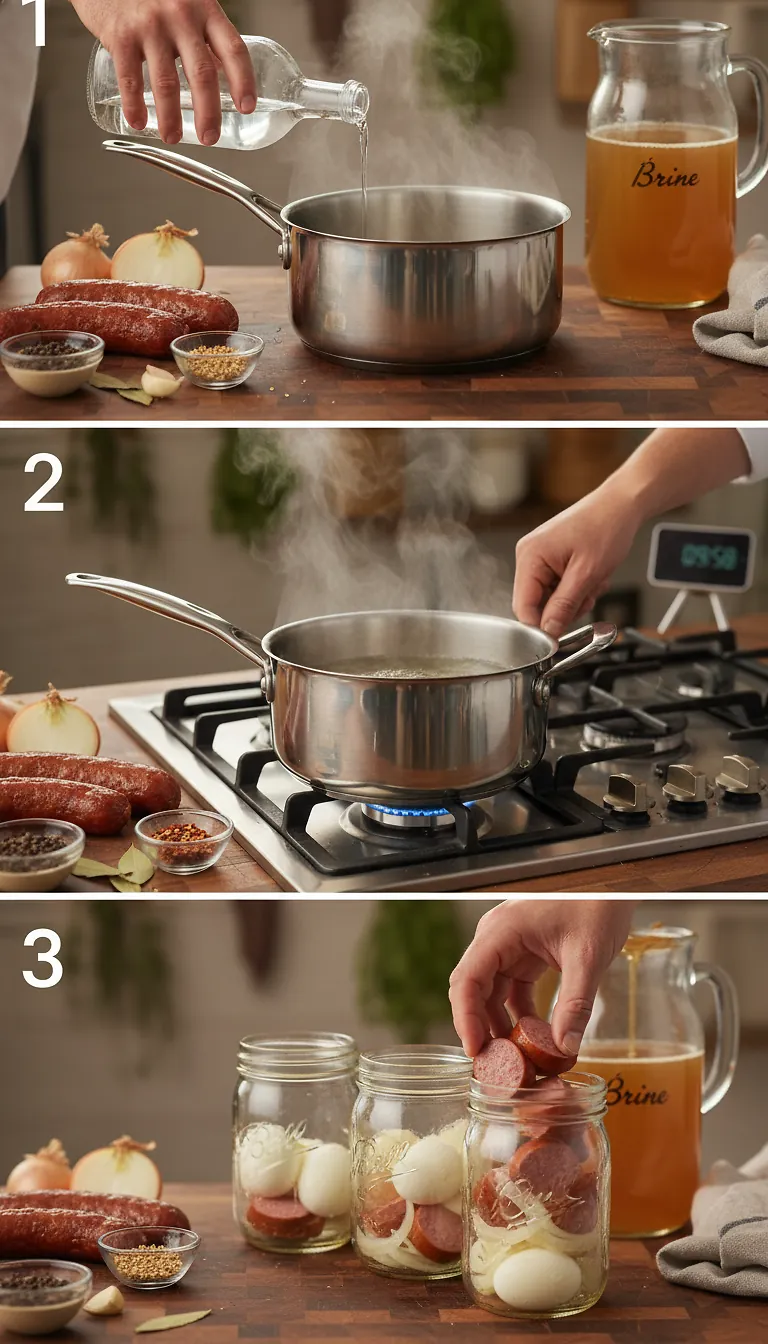
Heat a cast-iron skillet or heavy-bottomed pan over high heat until it’s visibly hot. Add the whole ring of smoked sausage. Sear for 2-3 minutes per side, until a deep, browned crust forms. Remove and let rest for 1 minute before slicing into ½-inch thick rounds. Simultaneously, in a medium saucepan, combine all brine ingredients (white vinegar, water, red wine vinegar, salt, pickling spice, peppercorns, red pepper flakes, crushed garlic). Bring to a rolling boil over high heat. Heat Management: The brine boil and sausage sear should happen at the same time. This is the core of efficient high-heat cooking.
Step 3: The Merge [Combine & Cool]
Once the brine boils, reduce the heat and let it simmer actively for 10 minutes. This extracts flavor from the spices and garlic. After simmering, remove the brine from heat and let it cool to room temperature. This is critical; pouring hot brine over eggs can cook them further and create a rubbery texture. While the brine cools, layer the sliced seared sausage, hard-boiled eggs, and onion slices in clean, quart-sized jars. Pour the completely cooled brine over the contents, ensuring everything is submerged. Seal the jars tightly.
Step 4: The Transform [Rest & Develop]
Refrigerate the sealed jars. The flavor development—the interaction between the charred sausage, the eggs, onions, and the acidic, spiced brine—requires time. Let them rest in the refrigerator for at least one week before serving. This patience allows the flavors to fully penetrate and harmonize.
Pro Tips for Achieving the Perfect Char
Surface Moisture Control: Pat the sausage ring dry before searing. Excess moisture steams the meat, preventing the Maillard reaction. Dry surface equals perfect crust.Pan Temperature Benchmark: Your pan should be so hot that a drop of water sizzles and evaporates instantly. This ensures immediate searing, not sticking.Knife Angle for Faster Prep: When slicing the onion, use a sharp knife and a slight forward rocking motion. This is faster and safer than a straight vertical chop.Carry-Over Cooking Awareness: The sausage will continue to cook slightly after searing. Slice it after a 1-minute rest to retain juices.Resting Period Importance: The one-week refrigeration is non-negotiable. It’s the “low and slow” phase where all the high-heat work translates into deep, integrated flavor.
Behind the Recipe: Chef Jax’s Kitchen Notes
This recipe was born from a need for a high-impact, portable protein for post-grill sessions. The classic pickled egg felt incomplete. Adding sausage was obvious, but simply tossing it in raw lacked depth. Applying The Chop & Char Method—searing the sausage first—transformed it. The charred notes cut through the vinegar’s sharpness, creating a balanced, sophisticated bite. It embodies the Chop & Char lifestyle: a minimal active time investment for a result that feels meticulously crafted, perfect for chefs, hunters, campers, or anyone who values flavor efficiency.
Perfect Pairings & Signature Dips
These Pickled Eggs and Sausage are a bold standalone, but they shine as part of a board. Pair them with sharp, creamy elements like a blue cheese spread or a simple mustard aioli from our Signature Labs archives. For a non-alcoholic pairing, contrast the tangy, spicy notes with a complex ginger-citrus tonic or a grilled peach-infused water. The fat from the sausage and egg balances beautifully with acidic and herbal beverages.
Frequently Asked Questions
Q: Can I use a different type of sausage for this Pickled Eggs and Sausage recipe?
A: Absolutely. The high-heat sear principle applies universally. Choose a sausage with good fat content (like a hot Italian or a bratwurst) and sear it whole before slicing. The char will carry the flavor.
Q: How long can I store Pickled Eggs and Sausage in the refrigerator?
A: When properly refrigerated in sealed jars, they will maintain optimal texture and flavor for up to 3-4 weeks. The vinegar brine is an effective preservative.
Q: Why is searing the sausage so crucial for Pickled Eggs and Sausage flavor?
A: The sear creates the Maillard reaction—developing hundreds of new flavor compounds. These complex, savory notes then infuse into the brine and the other components, creating a deeper, more professional flavor profile than raw sausage would.
Q: Can I reuse the brine from my Pickled Eggs and Sausage?
A: No. For safety and flavor integrity, discard the brine after use. Each batch should be made with fresh, simmered brine to ensure proper acidity and avoid cross-contamination.
Q: What’s the best way to serve Pickled Eggs and Sausage?
A> Serve them chilled as a snack, sliced on a charcuterie board, or as a high-protein addition to a salad. The contrast of the cool, tangy pickle and the warm, charred sausage flavor is the key experience.
Conclusion
Restaurant-quality depth of flavor doesn’t require hours of passive simmering. It requires targeted, high-heat action and efficient prep—the core of The Chop & Char Method. By applying a simple sear to the sausage and building a robust, simmered brine, you transform Pickled Eggs and Sausage from a simple preserved item into a gourmet experience with just 15 minutes of work. Heat is your friend; don’t fear the flame. Use it strategically, prep with purpose, and let time do the final, easy work for you.
Pickled Eggs and Sausage Final Result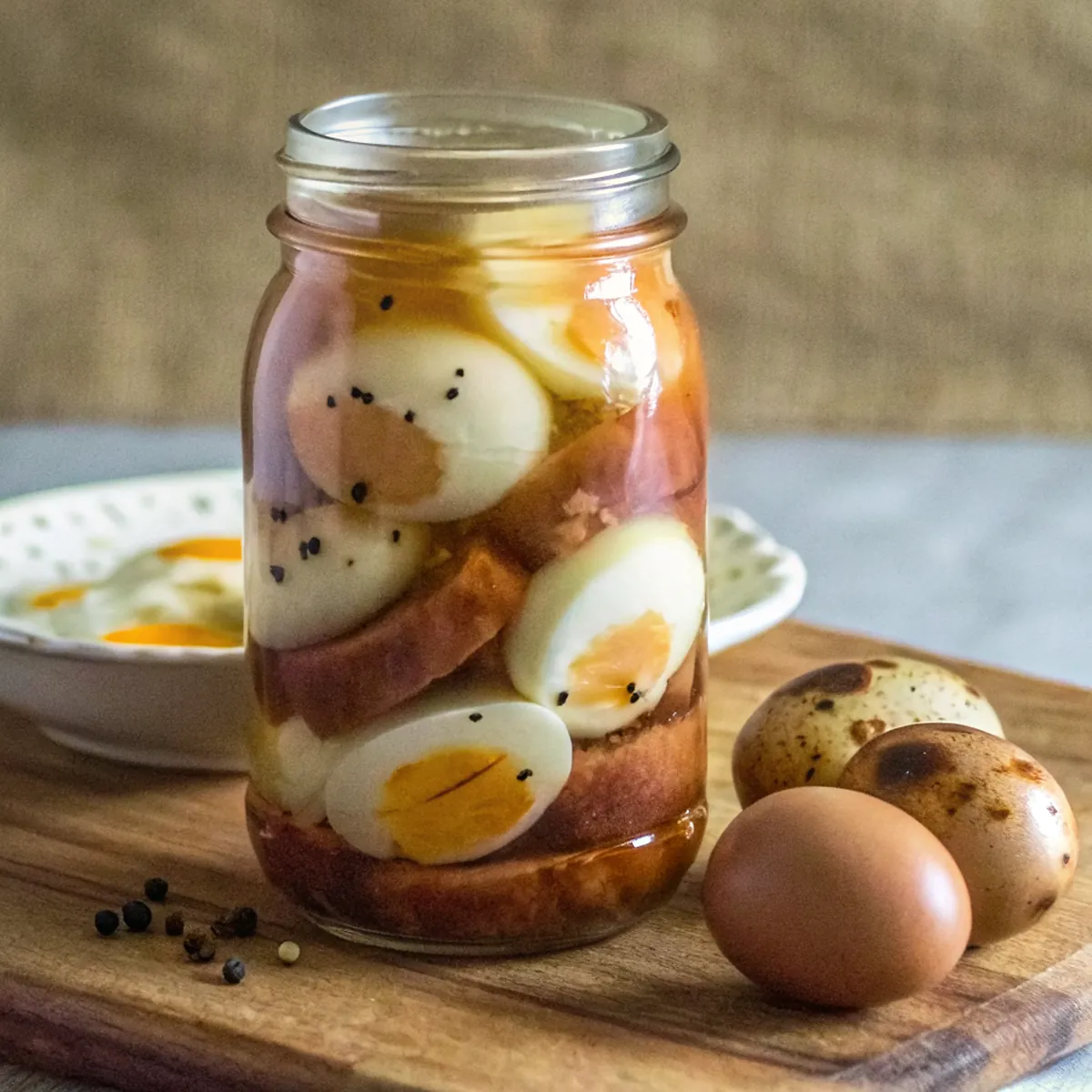
Mastered the Char? Share your kitchen success story in the comments, rate the recipe, and tag us on Instagram and TikTok with #ChopAndChar — Chef Jax might feature your masterpiece in our community spotlight!
Hashtags: #ChopAndChar #TheChar #TheChop #ChefJax #HighHeatCooking #15MinuteMeals #GrillMaster #PickledEggsAndSausage
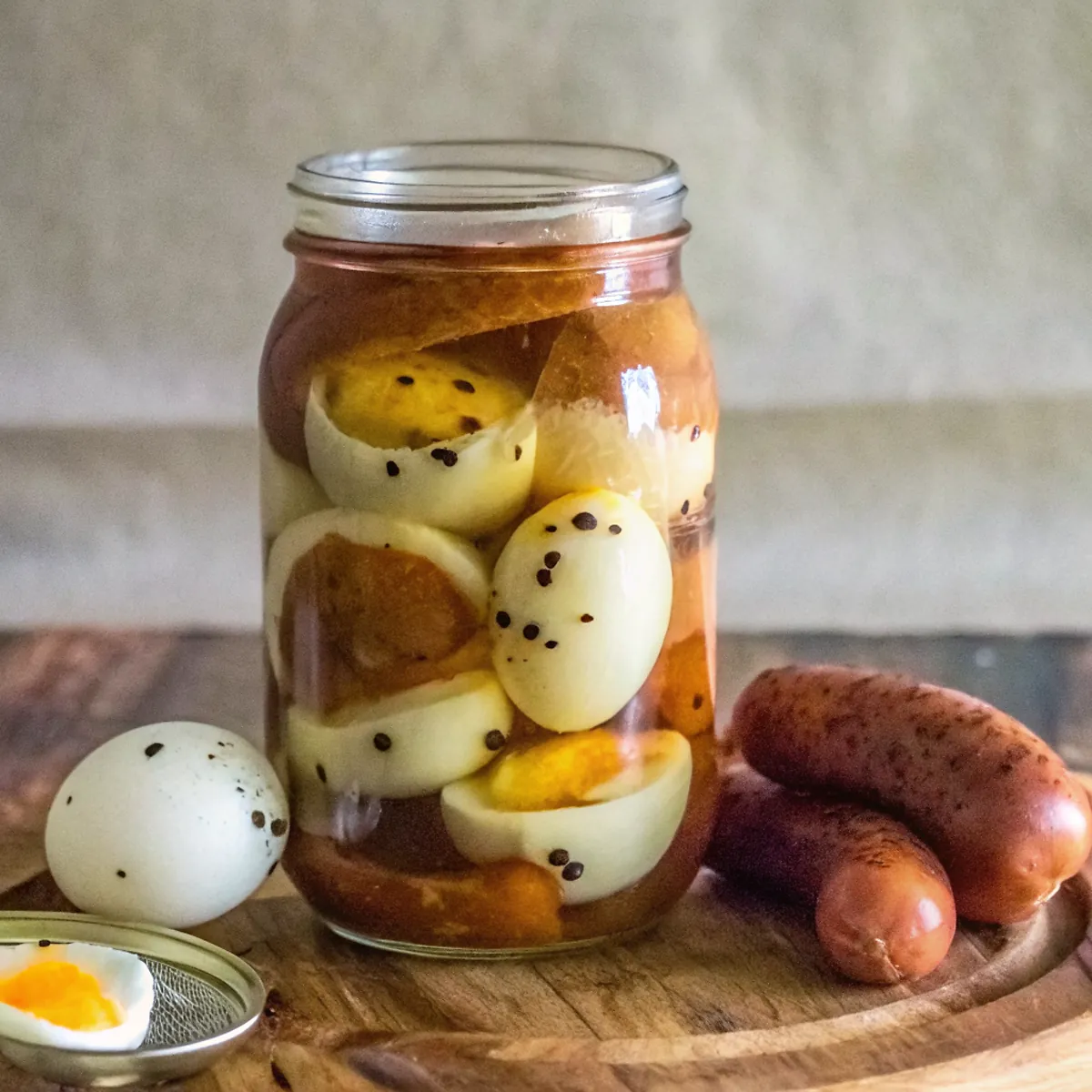
Pickled Eggs and Sausage
Ingredients
Instructions
- Step 1: Prepare the Brine: Add all the brine ingredients to a saucepan and bring to a boil.
- Step 2: Simmer and Cool the Brine: Reduce heat and simmer for 10 minutes, then let cool to room temperature.
- Step 3: Assemble and Refrigerate: Layer the eggs, sausage, and onion slices in jars and pour in the cooled brine. Seal the jars and refrigerate for at least one week before serving.