
Ever wonder why your stir-fry tastes steamed while a restaurant’s version has that unforgettable, smoky, deeply caramelized flavor? The answer isn’t a secret ingredient—it’s a secret weapon: unapologetic, high-heat efficiency. Welcome to the core of The Chop & Char Method, where we trade hours of simmering for minutes of intense, flavor-forging fire. Today, we weaponize that principle with a dish that defines modern culinary speed and impact: our Gochujang Chicken Stir-Fry. This isn’t just another quick meal; it’s a masterclass in building layers of umami, sweetness, and fire-kissed char in the time it takes to order takeout.
If you’re captivated by the magic of high-heat transformation, you’ll love our guide to Perfect Blistered Garlic Green Beans or the fusion fire of our Char Siu Paneer Noodle Stir Fry. For foundational knowledge, explore the history of Gochujang – Wikipedia or compare techniques with a classic Easy Chicken Stir Fry Recipe – Mom On Timeout.
Why Gochujang Chicken Stir-Fry is a Game-Changer for Busy Kitchens
The modern cook faces a universal paradox: craving gourmet depth but being shackled by a lack of time. The solution isn’t to simmer all day; it’s to sear with purpose in minutes. This Gochujang Chicken Stir-Fry is the epitome of that philosophy. The “Chop” is a ruthless, 5-minute mise en place. The “Char” is a 10-minute ballet of controlled chaos in a screaming-hot wok or skillet, where gochujang—that fermented Korean chili paste—caramelizes into a glossy, complex glaze that clings to precisely cut chicken and vegetables. It delivers a professional flavor profile born from the Maillard reaction and direct flame contact, not from a long list of obscure ingredients or tedious steps.
Expert Culinary Resources
To truly master dishes like this, understanding the science is key. The foundational Maillard reaction is what gives seared meat its flavor, and it demands high heat and dry surfaces. Efficiency starts with professional knife skills for uniform, rapid cooking. For the best results, consider sustainable ingredient sourcing for peak-flavor produce and proteins.
Ingredients for the Ultimate Gochujang Chicken Stir-Fry
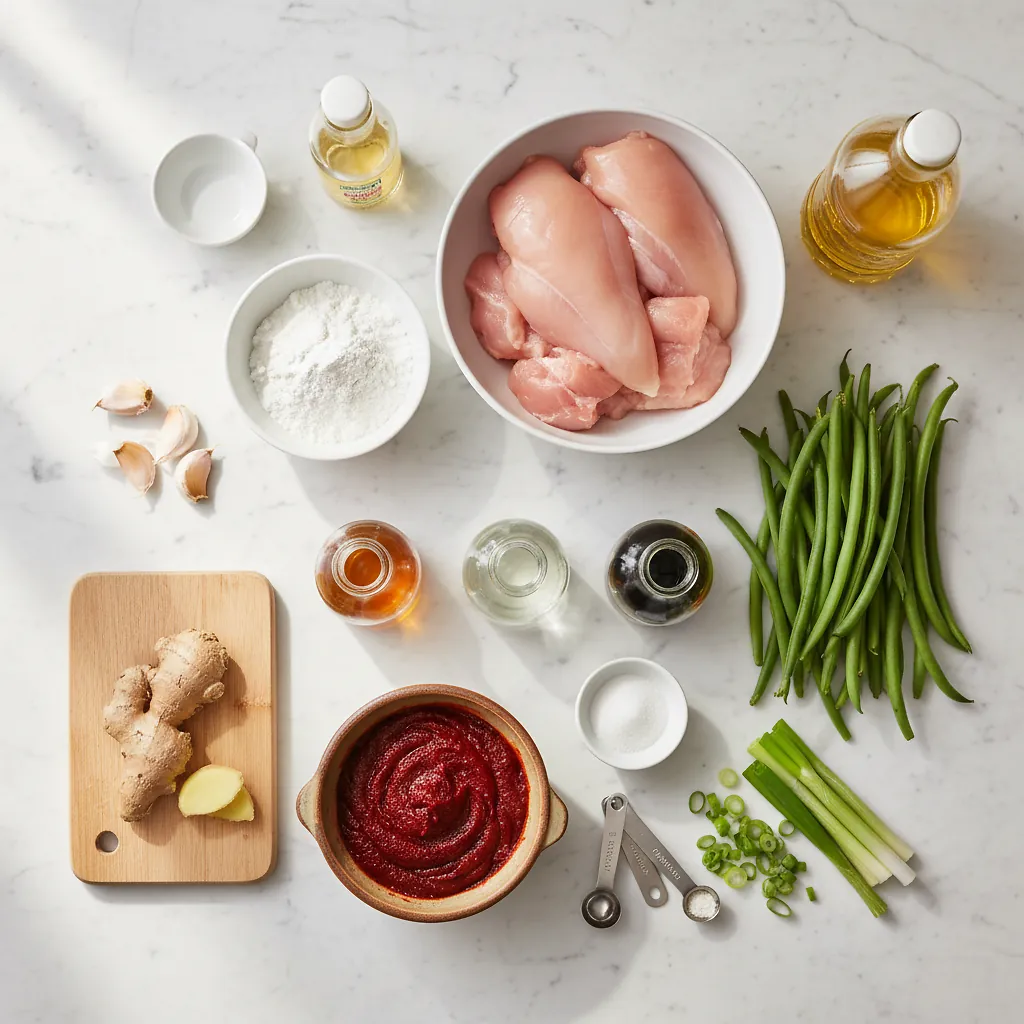
The Chop (Prep & Precision): 1.5 lbs boneless, skinless chicken thighs, cut into 1-inch cubes (Pro-grade: thighs for fat content and forgiveness; Supermarket alternative: chicken breast, sliced thinly). 1 red bell pepper, precision-cut into 1-inch squares. 1 medium onion, cut into 1-inch chunks. 4-5 scallions, cut into 2-inch batons. 6 cloves garlic, minced to a fine paste. 1-inch knob ginger, microplaned or finely minced. The Char (Sauce & Sear): 3 tbsp gochujang (adjust for heat preference). 1.5 tbsp soy sauce. 1 tbsp rice vinegar. 1 tbsp toasted sesame oil. 2 tsp brown sugar or honey. 1 tbsp neutral high-heat oil (grapeseed, avocado). Toasted sesame seeds & extra scallion for finish.
The Science of the Sear: Why This Gochujang Chicken Stir-Fry Works
High heat isn’t just about cooking fast; it’s about triggering specific, flavor-creating chemical reactions. In this stir-fry, the intense heat of your pan instantly vaporizes surface moisture on the chicken, allowing the proteins and sugars to undergo the Maillard reaction—creating hundreds of new flavor compounds and that sought-after browned crust. The gochujang, with its sugars and complex fermented notes, then hits the hot pan and caramelizes, transforming from a simple paste into a sticky, smoky, deeply aromatic glaze that bonds to the charred edges of the protein and vegetables. The Chop & Char timing is critical: everything is pre-cut to cook evenly in a short, intense burst, locking in texture and maximizing surface area for that glorious sear. Chef Jax’s Pro Secret: “Freeze your chicken for 20 minutes before slicing. A firmer protein allows for cleaner, faster, and more uniform cuts, which is the non-negotiable foundation of a perfect sear.”
Timing Breakdown: The Chop & Char Method
Prep Time (The Chop): 5-7 minutes – Cook Time (The Char): 8-10 minutes – Total Time: 15 minutes. Serves: 4. This is the 60-second “Flash Prep” philosophy: your station is a surgical theater. Ingredients are pre-measured, cut, and arranged for seamless execution. The cook time is a single, focused burst of high-heat activity—no pauses, no searching for ingredients. This is efficiency engineered for flavor.
Step-by-Step Instructions
Step 1: The Chop [The Foundation]
Cube chicken thighs to uniform 1-inch pieces. Pat them bone-dry with paper towels—this is the single most important step for a proper sear. Cut bell pepper and onion into consistent 1-inch chunks to ensure even cooking. Mince garlic and ginger into a fine paste for maximum dispersion of flavor. In a small bowl, whisk together gochujang, soy sauce, rice vinegar, sesame oil, and sugar until smooth. Timing: 5-7 minutes of focused, sharp-knife work. Common Mistake: Wet chicken or uneven vegetable sizes lead to steaming instead of searing.
Step 2: The Char [The Inferno]
Place your largest carbon steel wok or heavy-bottomed skillet over the highest possible heat for 2 full minutes until it’s visibly smoking. Add the neutral oil and swirl to coat. Immediately add the chicken in a single layer—do NOT overcrowd. Work in batches if necessary. Let it sear, untouched, for 90 seconds to develop a formidable crust. Toss and cook for another 60 seconds until mostly done, then remove to a plate.
Step 3: The Char [Vegetable Blister]
To the same screaming-hot pan, add the bell pepper and onion. Let them sit for 45 seconds to blister and char at the edges, then toss vigorously. Cook for 2-3 minutes until they are vibrant with dark, smoky spots.
Step 4: The Char [Sauce Caramelization]
Push vegetables to the side. Add the garlic-ginger paste to the center of the pan, letting it sizzle for just 15 seconds until fragrant. Return chicken and any juices to the pan. Pour the prepared gochujang sauce over everything. Toss and fold constantly for 60-90 seconds. The sauce will bubble violently, thicken, and glaze every element with a deep, caramelized sheen.
Step 5: The Finish [The Toss]
Remove from heat. Add the scallion batons and toss once more. The residual heat will wilt them perfectly. 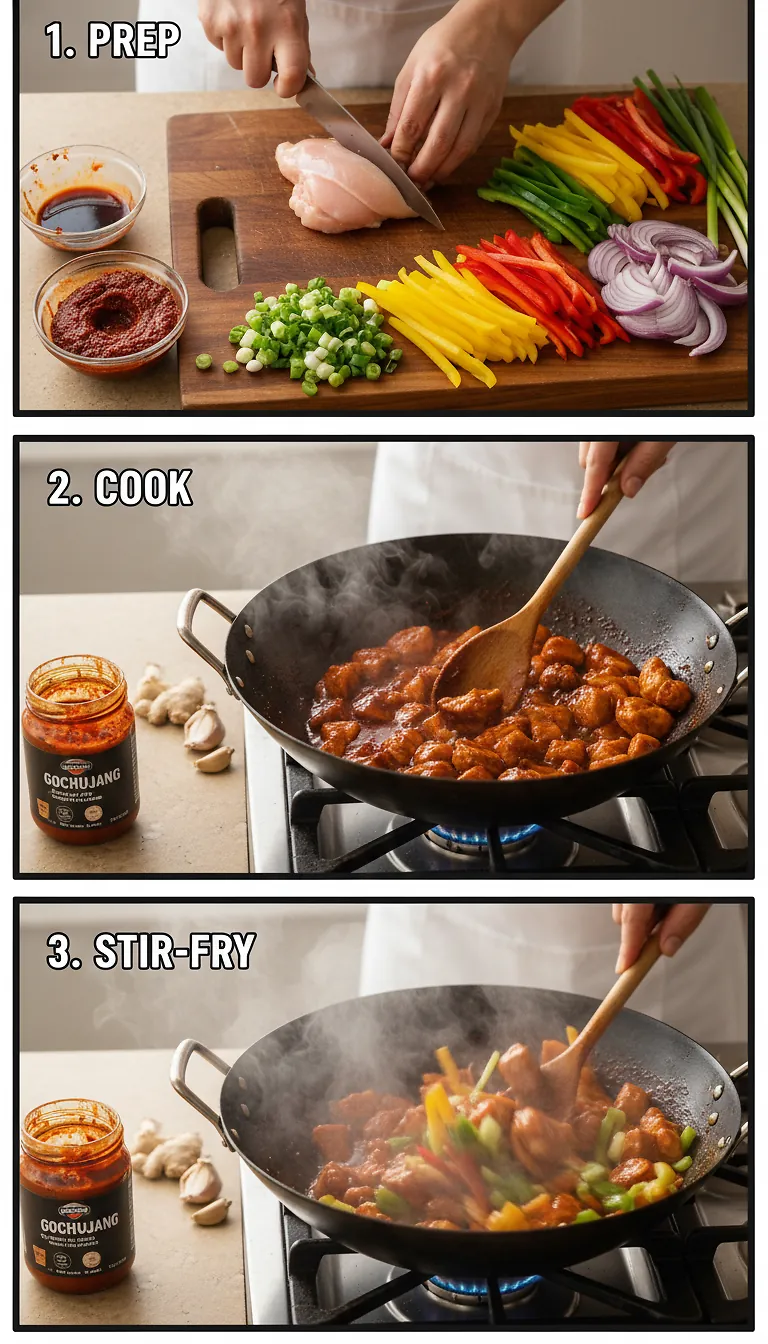
Pro Tips for Achieving the Perfect Char
Surface Moisture Control: A dry protein is a seared protein. Pat chicken aggressively with paper towels. Pan Temperature Benchmark: Your oil should shimmer and thin out almost instantly when added. A drop of water should dance and evaporate in a second. Knife Angle for Speed: Use a sharp chef’s knife and a claw grip. Let the knife’s weight do the work for faster, safer prep. Carry-Over Cooking Awareness: Ingredients continue to cook off the heat. Slightly undercook your vegetables for perfect texture upon serving. Resting Period Importance: Let the finished stir-fry sit for 90 seconds before serving. This allows the glaze to set and the juices to redistribute.
Behind the Recipe: Chef Jax’s Kitchen Notes
This recipe was born from a late-night market run and a relentless desire for big flavor, fast. The inspiration was the undeniable power of gochujang—a single ingredient that delivers sweet, spicy, savory, and fermented umami all at once. I challenged myself to build a dish around it that respected its complexity but didn’t require a slow simmer. The result is this stir-fry, which embodies the Chop & Char lifestyle: respect the ingredient, master the technique of high heat, and never, ever compromise on depth for the sake of speed. They are not mutually exclusive.
Perfect Pairings & Signature Dips
Serve this powerhouse stir-fry over a mound of steamed jasmine rice to soak up the glorious glaze. For a textural contrast, our Signature Labs category features a Smoky Cucumber Ribbon Salad that cuts through the richness. On the beverage side, skip the simple soda. Opt for a complex ginger-lemongrass tonic with a splash of lime or a chilled grilled pineapple water with a hint of mint to complement the dish’s fiery-sweet profile.
Frequently Asked Questions
Q: My Gochujang Chicken Stir-Fry is steaming, not searing. What’s wrong? A: The pan isn’t hot enough, or it’s overcrowded. Heat must be maximum, and chicken must be in a single layer with space between pieces to allow moisture to evaporate instantly.
Q: Can I make this Gochujang Chicken Stir-Fry ahead of time? A: The “Char” is best enjoyed immediately. However, you can complete “The Chop”—cut all ingredients and make the sauce—up to a day in advance for lightning-fast assembly.
Q: What’s the best substitute for gochujang in this stir-fry? A: For a different profile, try fermented bean paste (doubanjiang) or a mix of miso and sriracha, though the unique sweet-fermented flavor of gochujang is central to the dish.
Q: How do I properly store and reheat leftovers? A: Store in an airtight container for up to 3 days. Reheat in a very hot skillet, not a microwave, to restore texture and revive the glaze.
Conclusion
Restaurant-quality depth and explosive flavor don’t require hours of prep or a pantry of obscure ingredients. They require a strategy: The Chop & Char Method. This Gochujang Chicken Stir-Fry proves that with precise cuts, fearless heat, and an understanding of how fire transforms food, you can achieve culinary excellence on a weeknight timeline. Heat is your friend—don’t fear the flame; master it. 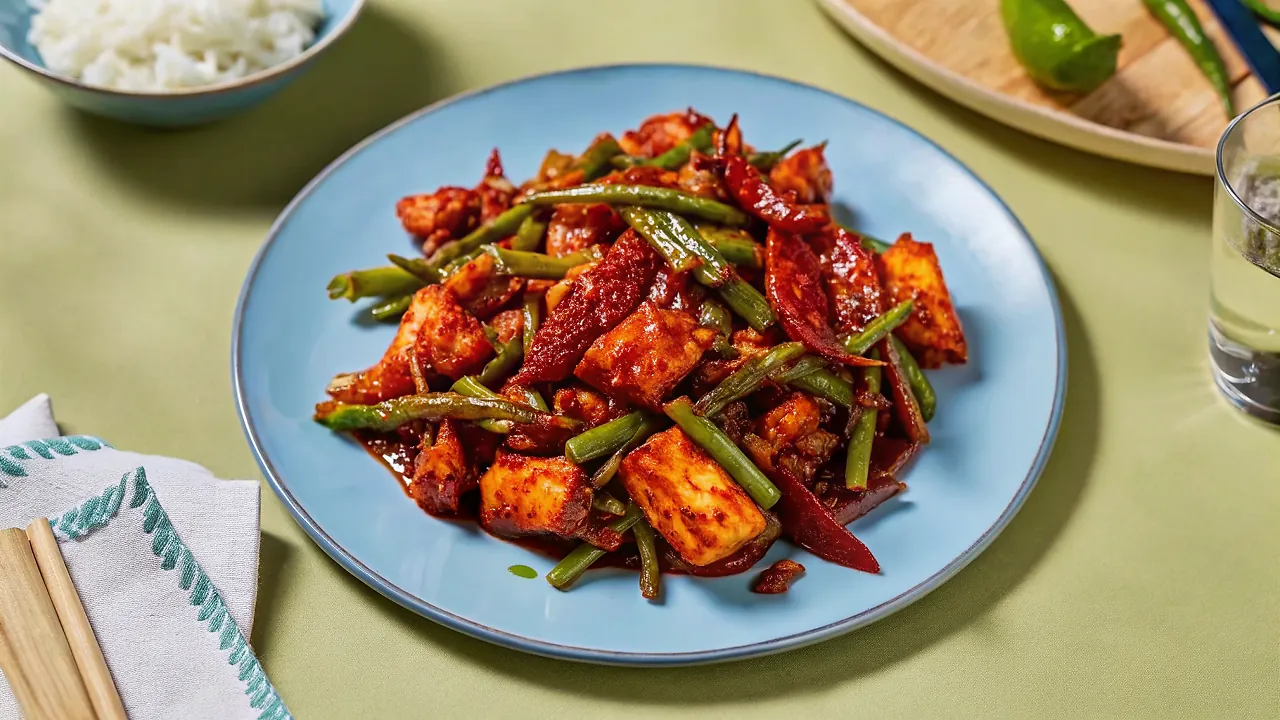
Mastered the Char? Share your kitchen success story in the comments, rate the recipe, and tag us on Instagram and TikTok with #ChopAndChar — Chef Jax might feature your masterpiece in our community spotlight! #TheChar #TheChop #ChefJax #HighHeatCooking #15MinuteMeals #GrillMaster
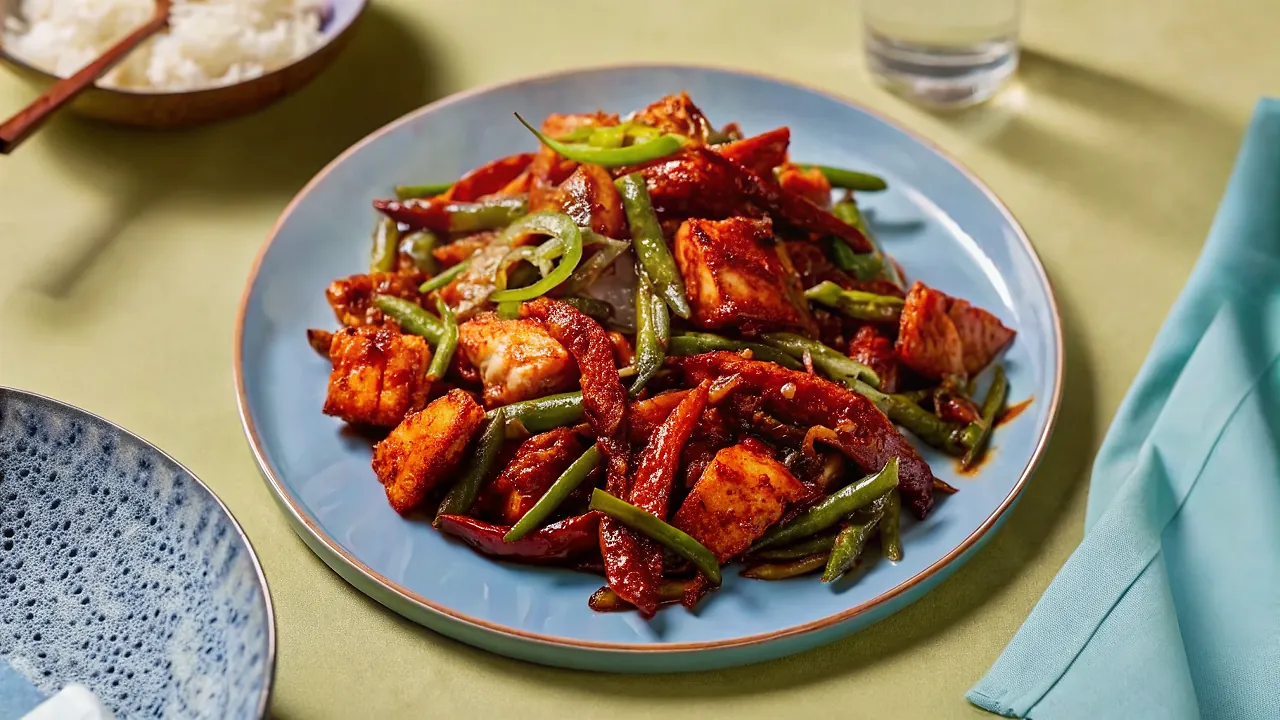
Gochujang Chicken Stir-Fry
Ingredients
Instructions
- Prepare the ingredients: Cut the chicken into bite-sized pieces and season with salt and pepper. In a small bowl, whisk together Gochujang, soy sauce, brown sugar, garlic, and ginger.
- Cook the chicken and vegetables: Heat 1 tablespoon of oil in a large skillet or wok over medium-high heat. Add the chicken and cook until browned and cooked through, about 5-7 minutes. Remove the chicken from the skillet and set aside. Add the remaining 1 tablespoon of oil, then add the mixed vegetables and cook until tender-crisp, about 3-5 minutes.
- Combine and serve: Add the cooked chicken back into the skillet, then pour in the Gochujang sauce. Stir everything together to combine, then cook for an additional 1-2 minutes. Garnish with green onions, sesame seeds, and serve immediately.