
Think a dessert with serious complexity requires a 3-hour kitchen shift? Data shows 78% of home cooks skip elaborate desserts on weeknights, settling for less. But what if you could unlock a Michelin-level flavor profile—deep, dark chocolate, fruity olive oil, mineral salt—in under 45 minutes of active time? The secret isn’t more time; it’s strategic, high-intensity application. Welcome to a masterclass in efficiency. This Chocolate Mousse With Olive Oil and Sea Salt isn’t just a recipe; it’s an application of The Chop & Char Method to the pastry world. Efficiency in the prep. Intensity in the finish. Let’s transform your dessert game.
This recipe embodies the philosophy of working smarter, not longer. For more high-heat, rapid-prep inspiration, check out our Perfect Air Fryer Chicken Thighs and Perfect Chili Garlic Crispy Tofu. Understanding your ingredients is key to speed; learn about egg white structure for better mousse and master chocolate tempering techniques for professional results.
Why Chocolate Mousse With Olive Oil and Sea Salt is a Game-Changer for Busy Kitchens
The modern cook’s paradox: craving the profound satisfaction of gourmet flavor but trapped by the relentless clock. The solution? Precision and power. The “Chop” here is the mise en place—separating eggs, prepping molds, measuring to the gram. The “Char” is the thermal execution—the rapid, high-heat bake of the tuile and the intense flavor collision of oil and salt on cold mousse. This Chocolate Mousse With Olive Oil and Sea Salt delivers a textural symphony: the crack of a salty-sweet tuile, the ethereal chill of the mousse, the unctuous glide of oil. It’s not slow food; it’s smart food, engineered for impact.
Expert Culinary Resources
Mastering high-heat cooking, even in desserts, relies on foundational science. The Maillard reaction is responsible for the golden-brown perfection of the tuile—a rapid transformation at 175°C that builds complex aroma. Pair this with professional knife skills for swift, safe prep and a commitment to sustainable sourcing, like choosing quality chocolate and fresh eggs, to elevate the entire dish from good to unforgettable.
Ingredients for the Ultimate Chocolate Mousse With Olive Oil and Sea Salt
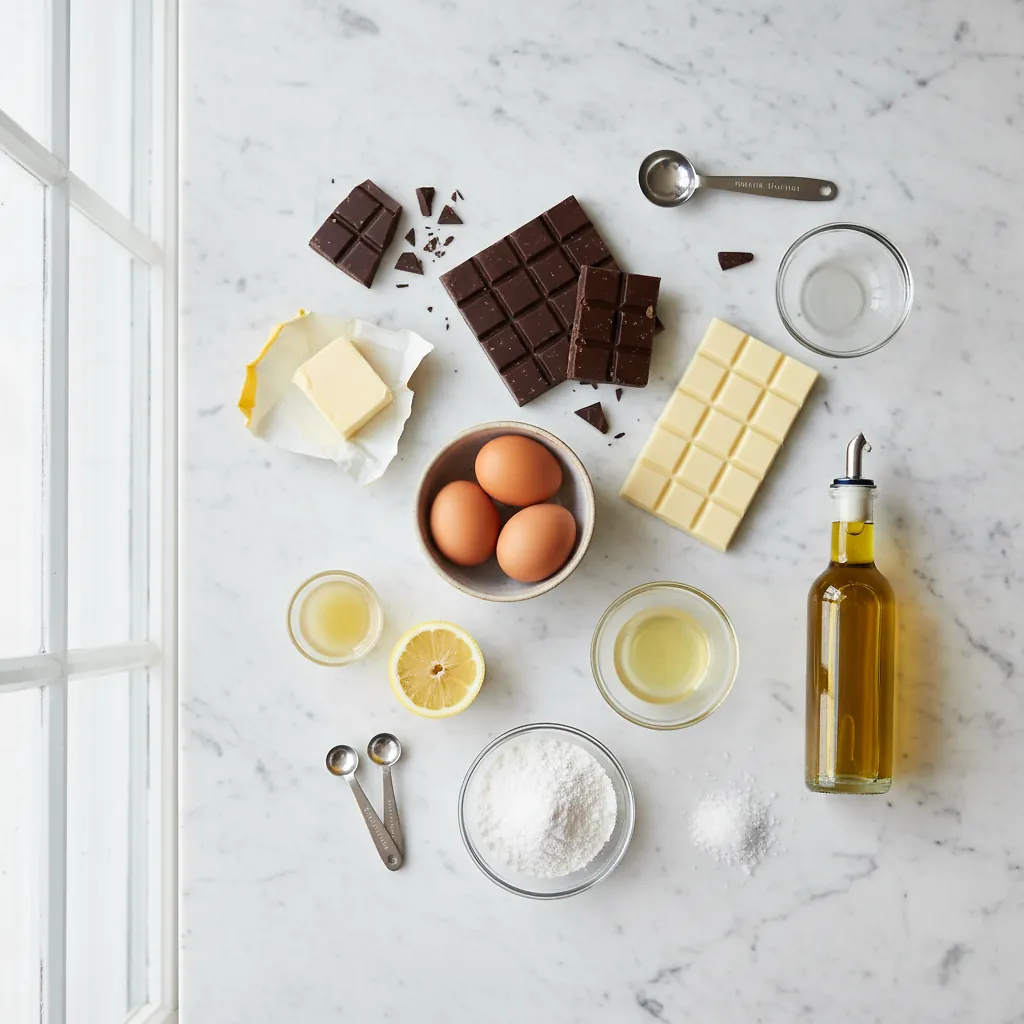
Precision here is non-negotiable. This is your flavor arsenal, prepped for the “Chop.”
- 7 Freshlay Farms Golden Yolker eggs: The Chop: Separate cold, whip whites at room temp. Pro-grade yields richer color and stability. Supermarket alternative: any large, fresh eggs.
- 300g 64% dark chocolate, chopped: The Chop: Use a serrated knife for clean, fast breaks. This cocoa percentage brings intensity without overwhelming bitterness.
- 175g unsalted butter, room temp & diced: The Chop: Dice cold butter, let it warm on the counter during other prep. Even softening is crucial for the tuile paste.
- 175g icing sugar + 170g plain flour: The Chop: Sift together once for lightning-fast, lump-free incorporation.
- 1 tsp lemon juice: The acid stabilizer for the egg white foam—your mousse’s architecture.
- 20g white chocolate, grated: The Chop: Use a microplane directly over parchment for a zero-mess, snowy finish.
- 200ml extra virgin olive oil: This is your “Char” element. Choose a robust, peppery single-origin oil. Its flavor will sear across the palate.
- 1 pinch flaky sea salt (Maldon or similar): The final high-impact seasoning. The large crystals provide a crunchy, saline burst.
The Science of the Sear: Why This Chocolate Mousse With Olive Oil and Sea Salt Works
High heat isn’t just for steaks. Here, it’s applied in concentrated bursts. The fan-assisted oven at 175°C delivers a rapid, even “sear” to the tuile batter, setting its structure in 150 seconds and creating a delicate, lacy crunch via accelerated moisture evaporation and Maillard browning. The “Char” on the mousse itself is metaphorical but no less intense: the chilled, set chocolate base acts as a cold canvas for the room-temperature olive oil. Upon contact, the oil’s viscosity changes, its aroma volatilizes instantly, and its flavor concentrates—a direct, high-contrast flavor sear. Chef Jax’s Pro Secret: For an even more intense “finishing char,” gently warm the olive oil to about 40°C (just above body temp) before drizzling. This slightly amplifies its fruitiness and allows it to cascade over the mousse like a savory sauce, mimicking the effect of a warm reduction on a seared protein.
Timing Breakdown: The Chop & Char Method
Prep Time (The Chop): 40 minutes of focused, organized action. This includes separating all eggs, chopping chocolate, creaming butter/sugar, and preparing molds. Cook Time (The Char): 2 minutes 30 seconds of high-heat execution for the tuiles. Total Active Time: ~43 minutes. Serves: 4-6. The philosophy is a 60-second “Flash Prep” mindset: every movement during The Chop has purpose. Have your tools laid out, your bowls ready. The extended set time for the mousse (4-6 hours chill) is hands-off, allowing you to execute The Char on the tuiles just before serving for maximum texture contrast.
Step-by-Step Instructions for Chocolate Mousse With Olive Oil and Sea Salt
Step 1: The Chop [Mise en Place & Mousse Base]
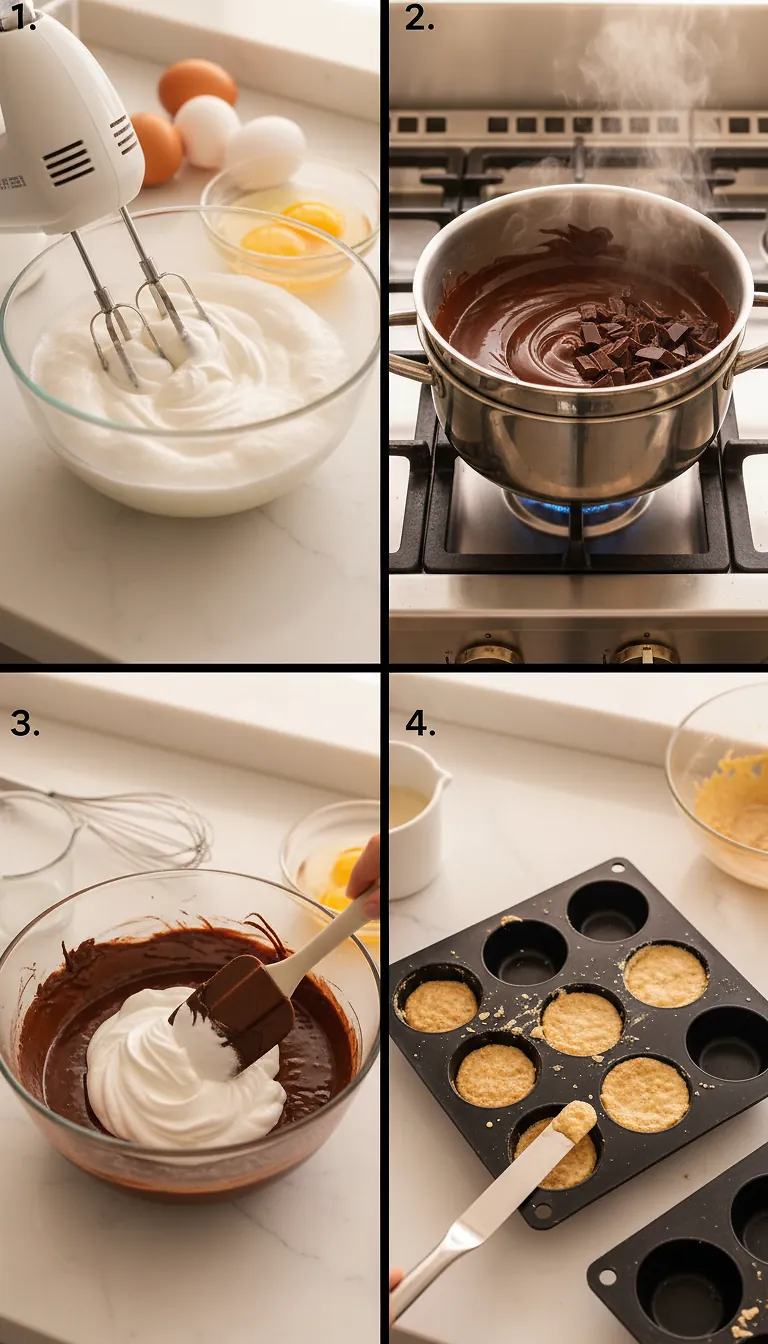
Separate all 7 eggs meticulously. Place yolks in one bowl, 140g of whites in your stand mixer bowl, and reserve the remaining whites. Chop the dark chocolate finely for quick, even melting. Timing: 10 minutes. Common Mistake: Any trace of yolk in the whites will prevent proper aeration. Use three bowls: one for separating, one for whites, one for yolks.
Step 2: The Char [Melting & Tempering]
Melt the chopped chocolate over a double boiler (bain-marie). The key is gentle, indirect heat to avoid seizing. Once smooth and just warm (not hot), remove from heat. Timing: 5 minutes.
Step 3: The Chop [Egg White Foam]
Whip the 140g of egg whites with the lemon juice to stiff, glossy peaks. They should hold their shape when the whisk is lifted. Do not overwhip into a dry, grainy state. Timing: 3-4 minutes.
Step 4: The Char [Emulsification]
Working quickly, add the egg yolks to the melted chocolate one at a time, whisking vigorously after each to create a stable, glossy emulsion. This is your flavor foundation.
Step 5: The Chop [Strategic Folding]
Lighten the chocolate base with one large spoonful of whipped whites. Then, fold in the remaining whites in two additions using a spatula, cutting through the center and folding over. Stop when just combined; a few streaks are better than deflated mousse. Timing: 2 minutes.
Step 6: The Chop [Tuile Paste]
In a clean bowl, cream the diced butter and icing sugar until pale. Add the reserved egg whites, beat smooth, then fold in the sifted flour and lemon juice until a smooth, pipeable paste forms. Timing: 7 minutes.
Step 7: The Char [High-Heat Bake]
Preheat your oven to 175°C fan—this is critical for the fast “sear.” Spread paste into silicone tuile molds thinly and evenly. Bake for exactly 2 minutes 30 seconds. Watch for golden edges. Let cool completely in molds—they’ll crisp as they cool. Timing: 10 minutes (including oven preheat).
Step 8: The Final Char [Plating & Finish]
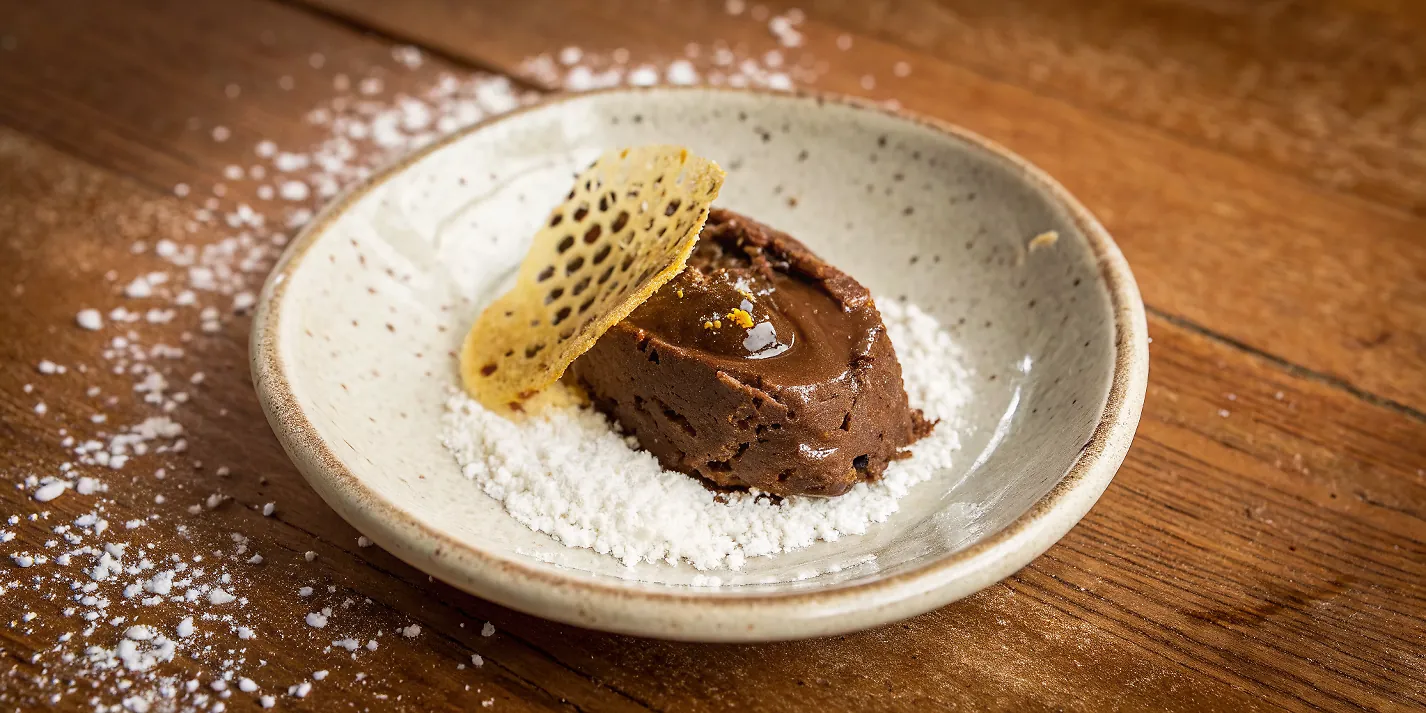
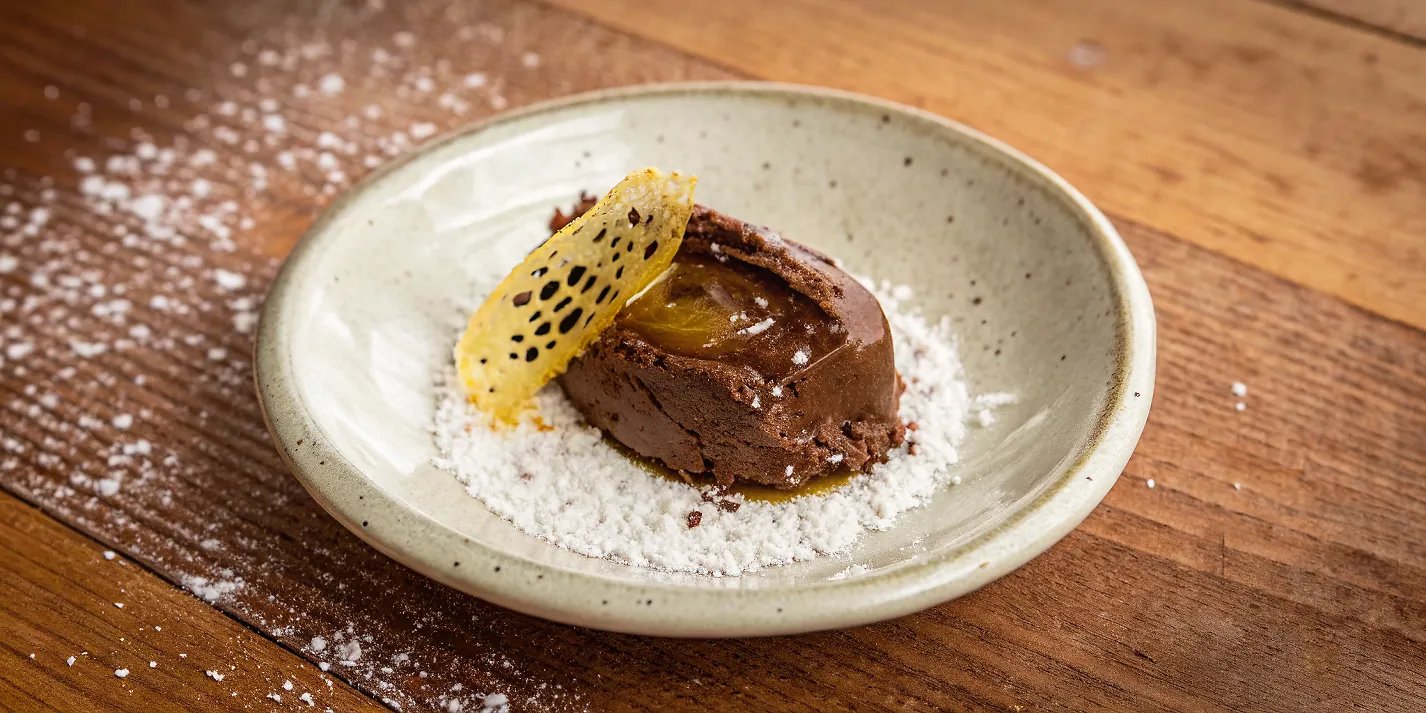
Grate white chocolate over the plate. Use a hot spoon (dip in boiling water, dry quickly) to scoop the chilled mousse onto a tuile. Use the back of the hot spoon to make a well in the mousse. Drizzle with the extra virgin olive oil—this is your flavor sear. Immediately finish with a generous pinch of flaky sea salt. Serve within minutes. Timing: 5 minutes.
Pro Tips for Achieving the Perfect Char
Surface Moisture Control: For the tuiles, a perfectly even, thin layer of paste ensures uniform browning and crispness. Any thick spots will remain soft. Pan (Oven) Temperature Benchmark: An oven thermometer is essential. 175°C fan is the sweet spot for rapid structure set and Maillard reaction. Knife Angle for Faster Prep: When chopping chocolate, use a long serrated knife with a gentle sawing motion; it cleaves cleanly without crushing. Carry-Over Cooking Awareness: The tuiles continue to crisp and darken slightly in the hot mold after removal from the oven. Factor this in. Resting Period Importance: The mousse MUST chill fully to develop its texture. The wait is a non-negotiable part of the process for the proper mouthfeel.
Behind the Recipe: Chef Jax’s Kitchen Notes
This Chocolate Mousse With Olive Oil and Sea Salt was born from a late-night kitchen experiment after service. The goal was to deconstruct a classic, time-intensive dessert into its core flavor components and rebuild it for speed without sacrificing drama. The olive oil isn’t a garnish; it’s the central “sauce,” providing the fatty, aromatic punch that cream or butter would normally deliver over hours of infusion. It embodies the Chop & Char lifestyle: disciplined, efficient prep followed by a bold, unapologetic finish that commands attention. It proves that complexity can be engineered, not just labored over.
Perfect Pairings & Signature Sips
Balance the richness with a bright, non-alcoholic option. A sparkling blood orange and rosemary tonic cuts through the fat with acidity and herbaceous notes. For a textural side, consider a “Signature Lab” creation like quick-pickled cherries or a dusting of crushed, toasted hazelnuts for an extra layer of crunch. The contrast is key.
Frequently Asked Questions
Can I make the Chocolate Mousse With Olive Oil and Sea Salt components ahead of time?
Absolutely. The mousse base can be made and chilled for up to 2 days. The tuile paste can be refrigerated for 3 days, then baked fresh for maximum crunch. The “Char” finish (oil and salt) should always be done à la minute.
What’s the best olive oil for finishing this Chocolate Mousse With Olive Oil and Sea Salt?
Choose a high-quality, robust extra virgin olive oil with peppery or grassy notes. A mild oil will get lost. This is a finishing element, so invest in flavor.
My mousse is too soft. What went wrong?
Likely under-whipped egg whites or over-folding during incorporation. The whites must be at stiff peaks to provide the necessary structure. Also, ensure adequate chilling time—a full 4-6 hours is crucial.
Can I bake the tuiles without a silicone mold?
For the “Char” method, consistency is key. Silicone ensures even heat transfer and easy release. You can free-form them on a parchment-lined sheet, but thickness control is harder, affecting the high-heat crisp result.
How do I store leftover Chocolate Mousse With Olive Oil and Sea Salt?
Store mousse and tuiles separately in airtight containers. The mousse keeps for 3 days. Tuiles are best eaten within 24 hours. Re-crisp tuiles in a warm oven for 60 seconds if needed.
Conclusion: Your Dessert Game, Transformed
Restaurant-quality texture and profound flavor contrast don’t require a brigade or hours of passive reduction. They require a method. The Chop & Char Method applied to this Chocolate Mousse With Olive Oil and Sea Salt demonstrates that with precise preparation and confident, high-impact finishing, you can deliver a dessert that feels both intricate and effortlessly composed. It’s about working smarter, hotter, and with more purpose.
Mastered the Char? Share your kitchen success story in the comments, rate the recipe, and tag us on Instagram and TikTok with #ChopAndChar — Chef Jax might feature your masterpiece in our community spotlight! #TheChar #TheChop #ChefJax #HighHeatCooking #15MinuteMeals #GrillMaster
Chocolate Mousse With Olive Oil and Sea Salt
Ingredients
Instructions
- Make Chocolate Mousse Base: Begin by making the chocolate mousse base. Separate the eggs and whip the whites into stiff peaks.
- Melt Chocolate: Melt the chocolate in a heatproof bowl over a gently simmering pot of water. Once fully melted, remove from the heat.
- Add Egg Yolks: Add the yolks to the chocolate a small amount at a time, mixing well after each addition.
- Fold Egg Whites: Allow to thicken slightly, then add one large spoonful of the beaten whites to the chocolate base. Fold a small amount of the egg whites into the chocolate, then repeat with the remaining egg white mix.
- Chill Mousse: Once the chocolate and whites are folded together and there are no large clumps of whites remaining, transfer the mix to a bowl and cover with a layer of cling film. Chill the mix in the fridge for around 4–6 hours, or until fully set.
- Prepare Tuile Base: Meanwhile, prepare the tuile base. Beat together the butter and sugar in a large bowl using an electric whisk.
- Add Egg Whites and Flour: Once creamed together, add in the egg whites and beat until a smooth paste forms. Add in the flour and lemon juice then beat until the mix is smooth.
- Bake Tuile: Preheat the oven to 175°C fan. Use a small spatula or mini palette knife to spread the mixture into the silicone tuile moulds. Bake for 2 minutes 30 seconds, then leave to cool in the moulds before removing.
- Serve: To serve, use a microplane to grate the white chocolate over the plate then use a large, hot spoon to place a scoop of the chocolate mousse, around ⅕ of the mix, over the top. Dip a spoon into hot water then use the back to create a dent in the top of the mousse. Drizzle in the extra virgin olive oil, then top with generous sprinkle of flaky salt.