
Ever wonder how high-end kitchens deliver restaurant-quality desserts in minutes while home cooks spend hours? The secret isn’t just skill—it’s strategy. Meet the Tiramisu Japanese Cheesecake Recipe, where creamy mascarpone meets airy Japanese cheesecake texture in a no-bake, high-protein powerhouse that’s ready in under five minutes of active prep. This isn’t your grandmother’s cheesecake—it’s a precision-engineered dessert built for flavor intensity and speed.
Professional kitchens don’t have time for slow, fussy methods. They rely on techniques that maximize flavor development while minimizing active time. That’s exactly what this recipe delivers: the rich coffee notes of tiramisu, the delicate bounce of Japanese cheesecake, and the protein punch of cottage cheese—all without turning on your oven. Whether you’re meal-prepping for the week or impressing last-minute dinner guests, this method proves that gourmet doesn’t mean complicated.
For more protein-packed dessert inspiration, check out our 2-Ingredient Japanese Cheesecake or the indulgent Cottage Cheese Chocolate Mousse. Want to dive deeper into the science? Explore High-Protein Cottage Cheese Recipes from Fit Foodie Finds or master the classic with Kat Lieu’s authentic Japanese cheesecake recipe.
Why Tiramisu Japanese Cheesecake Recipe is a Game-Changer for Busy Kitchens
Time is the ultimate luxury in modern cooking. Between work deadlines, family commitments, and the constant ping of notifications, who has hours to spend perfecting a dessert? This recipe flips the script. The Chop & Char Method means you’re spending minimal time on prep while maximizing flavor impact—think of it as culinary efficiency at its finest.
The “Char” here isn’t about flame—it’s about intensity. That deep coffee flavor, the caramelized notes from the Biscoff cookies, the dusting of cocoa that hits your nose before it hits your tongue—it’s all about creating maximum sensory impact in minimum time. Meanwhile, the “Chop” is your five-minute prep blitz: measure, blend, layer, chill. That’s it. No water baths, no cracking, no stress.
Expert Culinary Resources for Perfect Execution
Mastering this recipe means understanding a few professional principles. The Maillard reaction isn’t just for searing steaks—it’s why those Biscoff cookies develop such complex flavor when pressed into the creamy base. Coffee’s volatile aromatics bloom best when gently incorporated, not boiled. And the texture balance? That comes from understanding how cottage cheese’s protein structure creates stability without heaviness.
For knife skills that make prep lightning-fast, check out our Knife Skills 101 guide. Curious about sustainable ingredient sourcing? Our Sourcing Guide breaks down how to choose the best dairy and coffee for maximum flavor and minimal environmental impact.
Ingredients for the Ultimate Tiramisu Japanese Cheesecake Recipe
Focus Keyword Ingredients
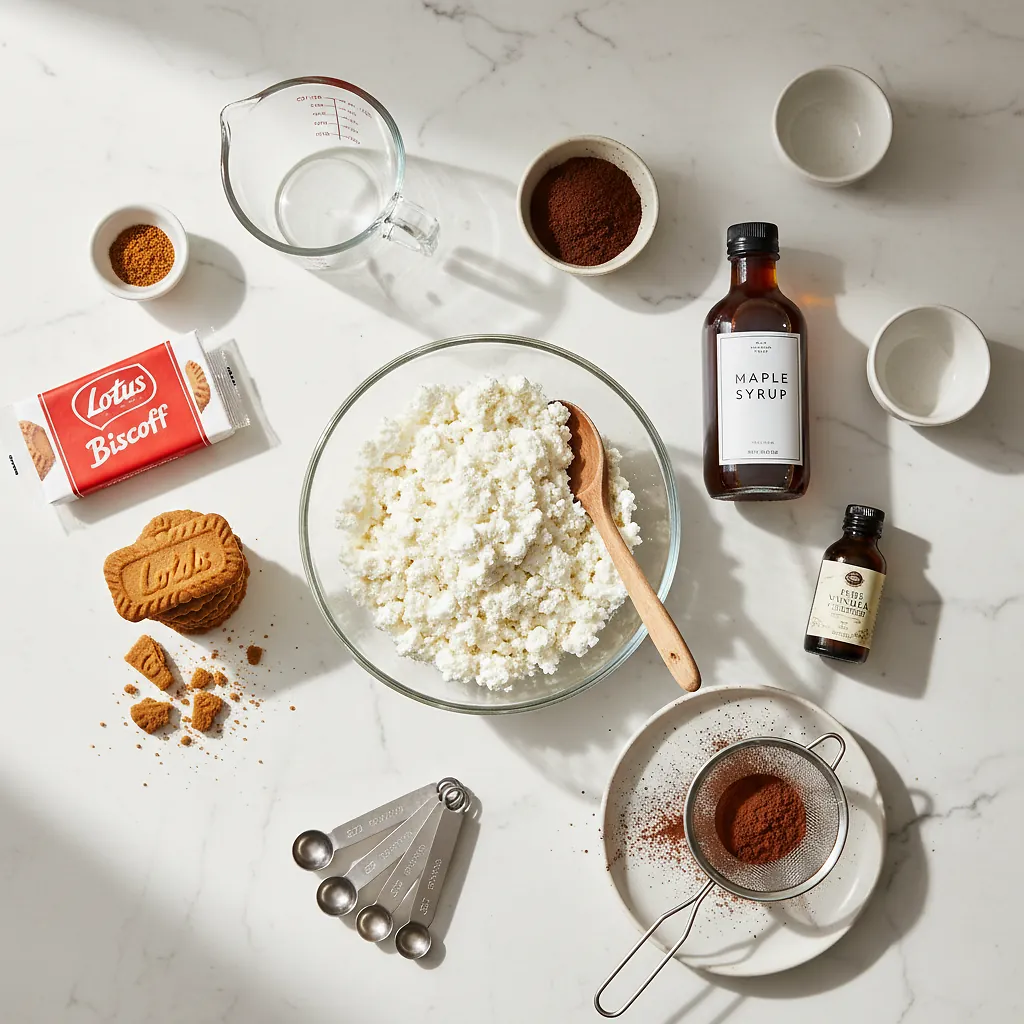
- Cottage cheese (full-fat preferred) – The protein powerhouse that creates that signature Japanese cheesecake bounce. Pro tip: Look for small-curd varieties for smoother blending.
- Maple syrup – Natural sweetness with complex caramel notes that complement the coffee. Grade A dark amber provides the deepest flavor.
- Vanilla extract – Real vanilla, not imitation. The alcohol content helps carry aromatic compounds throughout the mixture.
- Espresso powder – Instant coffee concentrate that dissolves completely for uniform flavor distribution.
- Biscoff cookies – The “char” element—these caramelized speculoos cookies add crunch and deep toffee notes.
- Cocoa powder – Dutch-processed for smooth bitterness that cuts through the richness.
Supermarket alternatives work fine, but for pro-grade results, source European-style cultured cottage cheese and single-origin espresso powder. The difference is noticeable.
The Science of the Sear: Why This Works
This isn’t just a recipe—it’s a study in flavor chemistry. The immersion blending process breaks down cottage cheese curds while incorporating air, creating that signature Japanese cheesecake lightness. The maple syrup’s invert sugars help stabilize the protein structure, preventing the mixture from becoming dense or gummy.
Espresso powder dissolves completely, ensuring every bite has uniform coffee flavor without the bitterness of over-extraction. Meanwhile, the Biscoff cookies undergo a subtle transformation when pressed into the mixture—their caramelized sugars begin to interact with the moisture, creating a soft-yet-crunchy texture that’s pure tiramisu magic.
Chef Jax’s Pro Secret: The key to that authentic tiramisu depth is bloom time. Even though this is a no-bake recipe, those four hours of chilling allow the coffee and vanilla compounds to fully develop, creating layers of flavor that unfold as you eat.
Timing Breakdown: The Chop & Char Method
Prep Time (The Chop): 5 minutes
Cook Time (The Char): 0 minutes
Chill Time: 4 hours
Total Time: 4 hours 5 minutes
Serves: 4-6
The 60-second philosophy applies here: every action has purpose. No wasted movements, no unnecessary steps. You’re not just making dessert—you’re executing a flavor strategy.
Step-by-Step Instructions
Step 1: The Chop – Prepare Your Base
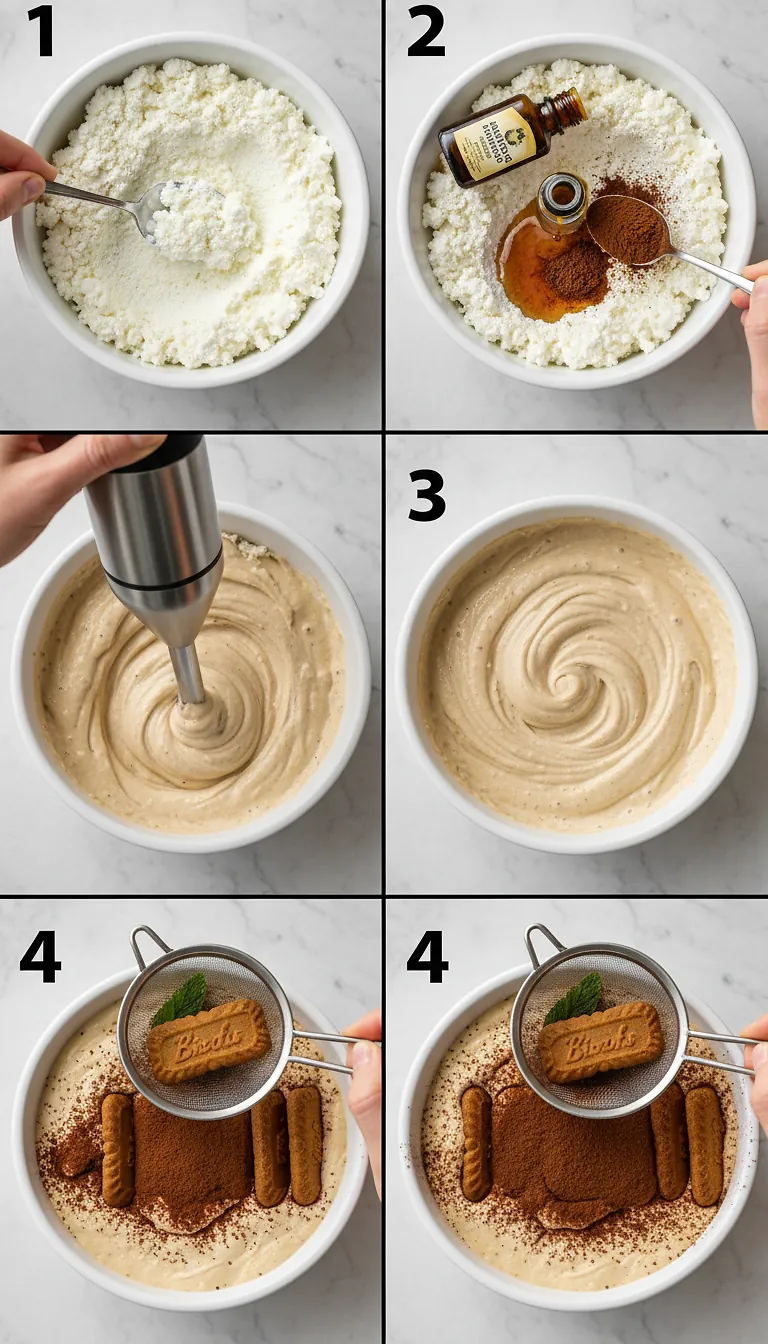
Remove approximately 1/2 cup of cottage cheese from your container to create space for the other ingredients. This isn’t wasteful—it’s precision. You need room for proper blending without overflow. Add 3 tablespoons maple syrup, 1 teaspoon vanilla extract, and 1 tablespoon espresso powder directly into the container.
Common mistake alert: Don’t try to blend in a separate bowl. The container’s shape and the immersion blender’s design work together for optimal aeration. Overcrowding the container? That’s a texture killer.
Step 2: The Char – Blend to Perfection
Using an immersion blender, blend the mixture until completely smooth and creamy—about 60-90 seconds. You’re looking for a texture that’s lighter than traditional cheesecake batter but richer than mousse. The mixture should ribbon off the blender when lifted.
Temperature matters here. Room-temperature cottage cheese blends more smoothly than cold. If you’re in a rush, a 10-second microwave zap (without the metal lid!) will do the trick.
Step 3: The Chop – Layer with Precision
Press 6-8 Biscoff cookies into the mixture as far as they’ll go, creating a mosaic pattern. Don’t just drop them on top—pressing them in allows the cookie to absorb some moisture, creating that perfect tiramisu texture contrast.
Work quickly here. The longer the mixture sits exposed to air, the more it begins to set, making cookie placement harder.
Step 4: The Char – Final Flourish
Dust the top generously with cocoa powder using a fine-mesh sieve. This isn’t just for looks—the cocoa’s bitter compounds create a flavor bridge between the sweet base and the coffee notes. Think of it as the final seasoning.
Cover tightly with plastic wrap, pressing it directly onto the surface to prevent skin formation. Refrigerate for at least 4 hours, preferably overnight. This patience pays off in flavor development.
Pro Tips for Achieving the Perfect Char
Surface moisture control: The secret to that perfect creamy texture is managing surface moisture. Pressing plastic wrap directly onto the mixture prevents condensation from forming a skin, which would create an unpleasant texture contrast.
Pan temperature benchmarks: While this is a no-bake recipe, understanding temperature is crucial. Your refrigerator should be at 37-40°F for optimal setting. Too cold, and the texture becomes dense; too warm, and it won’t set properly.
Knife angle for faster prep: When slicing to serve, use a warm knife (run under hot water, then dry) and cut with a single smooth motion rather than sawing. This preserves the layers and creates clean edges.
Carry-over cooking awareness: Even in the fridge, the mixture continues to develop flavor. Those coffee compounds keep blooming, the vanilla mellows, and the cookie layers soften to perfection. Plan accordingly.
Resting period importance: The 4-hour minimum isn’t arbitrary. It’s the exact time needed for the protein network to stabilize while allowing flavor compounds to fully integrate. Rush it, and you’ll miss the magic.
Behind the Recipe: Chef Jax’s Kitchen Notes
This recipe was born from a late-night craving and a nearly empty fridge. I had cottage cheese, some cookies, and a desperate need for something that tasted like it came from a patisserie window. The first attempt was good—but the second, with the espresso powder bloom and the precise cookie placement? That’s when the kitchen lit up.
What I love about this Tiramisu Japanese Cheesecake Recipe is how it embodies everything the Chop & Char Method stands for: maximum flavor impact with minimum active time. It’s the kind of recipe that makes people think you spent all day in the kitchen when really, you were doing other things while the fridge did the work.
Perfect Pairings & Signature Dips
Serve this with a shot of espresso for the full tiramisu experience, or pair it with our Grilled Pineapple Tonic for a non-alcoholic option that cuts through the richness. The caramelized fruit notes echo the Biscoff cookies while the carbonation refreshes the palate.
For a more decadent experience, try our Salted Caramel Drizzle as a finishing touch. The salt amplifies the coffee notes while the caramel adds another layer of complexity.
Frequently Asked Questions
Can I make this Tiramisu Japanese Cheesecake Recipe ahead of time?
Absolutely. This dessert actually improves with 24 hours of refrigeration. The flavors continue to develop, and the texture becomes even more luxurious. Just keep it well-covered to prevent moisture loss.
What’s the best substitute for Biscoff cookies in this recipe?
Ladyfingers are traditional for tiramisu, but they’ll be softer. For a similar caramelized flavor, try speculoos cookies or even graham crackers with a drizzle of honey. The key is that toffee-like note.
How do I prevent my cottage cheese from being lumpy?
Full-fat cottage cheese blends more smoothly than low-fat varieties. Also, make sure it’s at room temperature before blending, and don’t rush the immersion blending step. Those extra 30 seconds make a huge difference.
Can I use regular coffee instead of espresso powder?
Espresso powder is more concentrated and dissolves completely, giving you uniform flavor without grittiness. If you must use regular coffee, brew it double-strength and reduce the amount of maple syrup slightly to account for the added liquid.
Conclusion
Restaurant quality doesn’t require hours of prep—it requires understanding how to maximize flavor impact in minimal time. This Tiramisu Japanese Cheesecake Recipe proves that point beautifully. In five minutes of active work, you’re creating a dessert that delivers the complexity of a classic tiramisu with the elegance of Japanese cheesecake technique.
Mastered the Char? Share your kitchen success story in the comments, rate the recipe, and tag us on Instagram and TikTok with #ChopAndChar — Chef Jax might feature your masterpiece in our community spotlight!
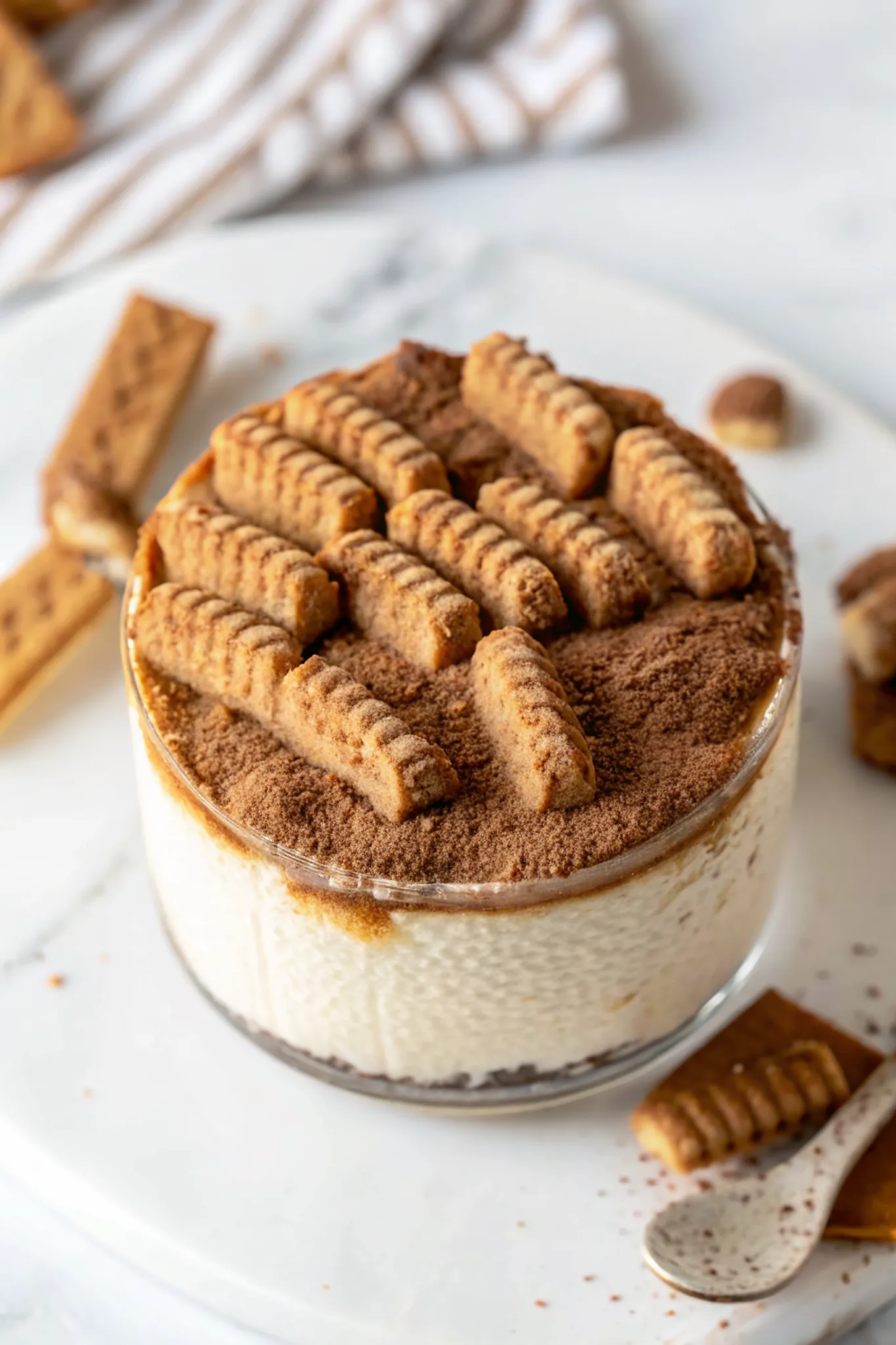
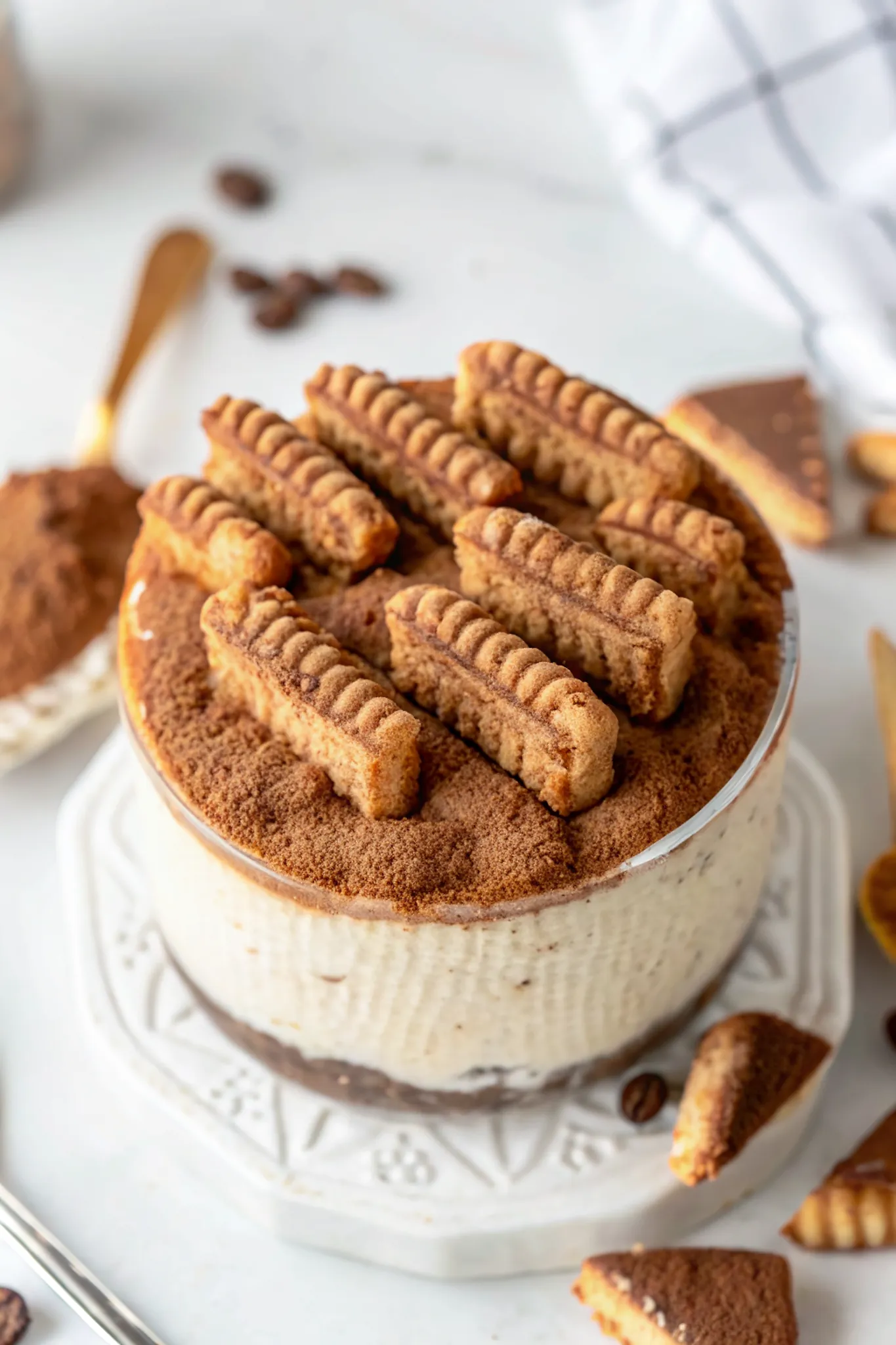
Tiramisu Japanese Cheesecake Recipe – 5 Ingredients, 27g Protein!
Ingredients
Instructions
- Prepare the Cottage Cheese Mixture: Remove some cottage cheese from the container to make space. Add maple syrup, vanilla, and espresso powder to the container. Use an immersion blender to blend until smooth and creamy.
- Assemble the Cheesecake: Press Biscoff cookies into the mixture as far as they'll go. Dust the top with cocoa powder.
- Chill and Serve: Cover and refrigerate for at least 4 hours, preferably overnight. Serve chilled and enjoy!